
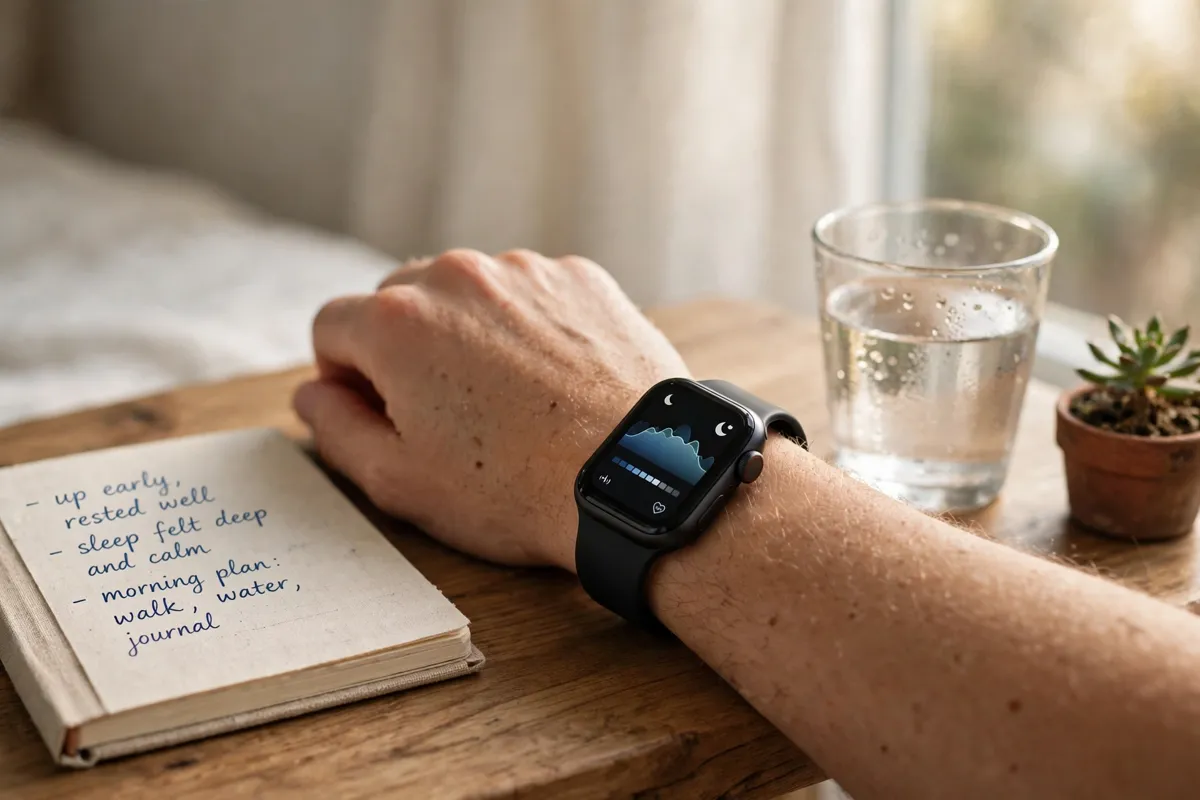

You have probably seen the word by now. It shows up in podcast titles, supplement ads, sleep-tracker reviews and headlines about people injecting themselves with things they mixed up at home. Biohacking. It sounds technical, a little rebellious, and very modern. But ask five people what it means and you will get five different answers.
That is because the word covers a lot of ground. At one end it means going to bed at the same time every night. At the other it means editing your own genes. This article sorts out what it really means, where it came from, the four camps inside it, and where the line sits between a harmless habit and a real risk.
What Is Biohacking? The Definition in Plain Words
The dictionaries keep it short. Cambridge calls biohacking “do-it-yourself biology” — scientific experiments with biological material, done by people who are not official experts or scientists. Merriam-Webster gives two senses: biological experimentation done outside a traditional medical or scientific research setting, and the act of using “biohacks” to improve health, performance or longevity.
Doctors who talk about the topic describe it the same way, in plainer language. Cleveland Clinic’s Dr. Melissa Young calls it “the art and science of maximizing human performance by hacking our biology” — making intentional changes in lifestyle, environment and body to improve mind, body and emotional health. WebMD puts it even more simply: making changes to your body or lifestyle to improve something about yourself, like your health, brainpower or athletic ability.
Put those together and the working definition is this: biohacking is the deliberate attempt to understand, measure and change your own biology so you feel or perform better. Deliberate — it is done on purpose. Measure — most biohackers track something, whether that is sleep, mood, heart rate or blood sugar. Change — the point is to adjust a habit and see what happens next.
That loop — change something, watch the result, adjust — is the heart of the whole idea. A person who moves their bedtime half an hour earlier and checks whether they feel sharper the next week is doing the same basic thing as someone who wears a glucose monitor to see how lunch affects their blood sugar. The tools are different. The thinking is the same.
Where the Word Came From
Biohacking is a young word with an old idea. Merriam-Webster dates its first known use to 1992. It is built from two parts: “bio”, meaning life or biology, and “hacking”, borrowed from computer culture, where a hack is a clever workaround — a shortcut that gets a system to do something it was not designed to do.
That double meaning is part of the confusion. “Hacking” suggests both a clever trick and an unauthorised break-in, and biohacking carries both flavours — small, clever tweaks to daily life at one end, experiments outside labs and oversight at the other. The word never separates the two, which is why the same term can describe a morning walk and a home gene-editing kit.
For years the word stayed on the fringes, used mostly by a small community of do-it-yourself biologists. It moved into the mainstream in the 2010s: entrepreneur Dave Asprey built the Bulletproof brand around it after founding Bulletproof 360 in 2013, and Wikipedia notes he is known for his promotion of the “biohacker” movement. The first biohacking conference was held in San Francisco in 2011, according to Asprey’s own account. From there the word spread into wellness podcasts, tech blogs and supplement marketing — and got looser every time it was used.
The Four Camps of Biohacking
One reason the word is so slippery is that it is not one community. It is at least four, and they barely agree with each other.
1. Lifestyle optimisation
This is the biggest camp, and the one most people mean when they use the word casually. It covers deliberate changes to the basics: sleep, food, movement, light and stress. Intermittent fasting, cold showers, morning sunlight, consistent bedtimes, high-intensity interval training — all of it sits here. Several doctors quoted by WebMD and Scripps make the same point: much of this camp is ordinary healthy living with a new label on it. As integrative medicine specialist Dr. Melinda Ring told WebMD, “at its core, much of biohacking is common sense with a new label: eat well, move your body, sleep enough, manage stress.”
2. The quantified self
This camp is less about changing anything and more about measuring everything. Its members wear smartwatches and fitness trackers, log their sleep, track their mood and energy, and sometimes wear continuous glucose monitors even without diabetes. The idea is that your body gives off data all day, and if you collect enough of it you can spot patterns — which foods leave you sluggish, which bedtime leaves you sharp — and then act on them. Even writing down how you feel each day is the low-tech version of the same habit. The risk here is subtler: Scripps warns that focusing on every measurement can create unnecessary stress, and wearable readings cannot diagnose a medical condition.
3. DIY biology
Short for do-it-yourself biology, and sometimes called “garage biology”, this is the camp the dictionaries had in mind first. It means experiments and research done outside universities, companies and government labs — by amateurs or professionals, in community labs or at home. Some of it is educational: growing yeast or bacteria to learn genetics. Some of it is more ambitious: working on cheaper ways to produce drugs such as insulin, or experimenting with gene-editing tools. This is where the word’s original meaning lives — and where the serious ethical and safety questions start.
4. Grinders
Grinders are the smallest and most extreme camp. They modify their own bodies with technology: magnetic implants under the skin, chips that open doors or store data, chemical injections, and experiments with gene sequencing. Cleveland Clinic’s Dr. Young describes grinders as strongly associated with body modification and cybernetic implants, driven by a philosophy called transhumanism — the belief that technology can evolve the human race beyond its current capabilities. She is blunt about it today: there are ethical and medical concerns, and nobody really knows what some of these practices will do to the body years down the line.
| Camp | What it is | Typical examples | General risk level |
|---|---|---|---|
| Lifestyle optimisation | Deliberate changes to daily habits | Consistent sleep, fasting windows, cold showers, morning light | Low — mostly established healthy habits |
| Quantified self | Measuring the body to find patterns | Sleep trackers, smartwatches, glucose monitors, mood logs | Low — but tracking can fuel anxiety |
| DIY biology | Science experiments outside institutions | Home genetics projects, community-lab research | Moderate to high — no oversight |
| Grinders | Body modification with technology | Implants, chips, injections, gene experiments | High — infection, unknown long-term effects |
What Biohacking Usually Looks Like Day to Day
Most of what gets called biohacking in practice falls into a handful of familiar categories. None of them is new — what is new is the frame: doing them deliberately, measuring the effect, and calling the result a hack.
Food and fasting
Diet is one of the biggest areas: eating plans such as keto or Mediterranean diets, elimination diets to look for food sensitivities, and time-restricted eating — eating only within a set window each day. Intermittent fasting is the best-known example. Cleveland Clinic notes it may help with blood sugar, insulin resistance and weight loss, while WebMD adds that research shows it can help burn fat, but it has not been proved better than simply eating fewer calories. Fasting is not right for everyone: Scripps advises talking to a doctor first if you have diabetes, low blood sugar, an eating disorder, take medication that must be taken with food, or are pregnant or breastfeeding. That list alone shows why a fasting plan copied from the internet is a poor idea.
Sleep and light
Sleep is the biohack with the strongest evidence behind it. WebMD notes that study after study has shown seven to nine hours of good-quality sleep benefits the heart, weight, thinking, immune system and mood. The biohacking version adds structure: the same bedtime every night, a cool dark bedroom, morning sunlight to reset the body’s internal clock, and less blue light from screens in the evening.
Movement and recovery
Exercise is the other pillar with solid evidence. High-intensity interval training — short bursts of hard effort with rest in between — is a favourite because it delivers a lot in a short session. Recovery gets just as much attention: cold therapy in the form of ice baths or cryotherapy chambers, saunas, and stretching. WebMD notes the science on cold therapy is mixed, and Scripps warns that sudden cold exposure raises heart rate and blood pressure, so people with heart or circulation problems should talk to a doctor first.
Wearables and tracking
Smartwatches and fitness trackers are the most visible biohacking tools. They record heart rate, sleep patterns, activity and stress levels, and the data feeds the measure-and-adjust loop. Some people also wear continuous glucose monitors to watch blood sugar through the day. The limits matter as much as the benefits: wearables track patterns, they do not diagnose conditions, and a single odd reading usually means less than it looks like. Knowing your numbers is useful only if you also know what they mean.
Supplements and nootropics
Nootropics — often called “smart drugs” — are substances marketed to improve memory, focus and alertness, running from everyday caffeine through herbal supplements such as ginseng and ashwagandha to prescription medicines for attention disorders. Caffeine is the one almost everyone already uses; as Dr. Young points out, most people do not realise it is a drug. The wider supplement market is where the evidence gets thinnest. WebMD warns that supplement claims often are not proven, products are not regulated the way drugs are, and there is no guarantee a bottle contains what its label says. Manufacturers are not allowed to claim supplements can prevent or treat disease, although some do anyway. Prescription nootropics should only be taken as prescribed, and anyone on medication should check for interactions first.
Neurohacking: The Brain-Focused Branch
Neurohacking is a subsection of biohacking, with the focus narrowed to the brain. Its methods include brain games, dietary changes, biofeedback, electrical and magnetic brain stimulation, and at the extreme end, brain implants. The goal is the same — better memory, focus and mood — but the target is one organ instead of the whole body. It shares the same problem as the rest of biohacking: some of it is well supported, some of it is speculation dressed up as science.
What Biohacking Is Not
Clearing up what the word does not mean is half the job of defining it.
First, biohacking is not a medical field. WebMD states it plainly: there are no set specialties, no qualifications and no governing body. Anyone can call themselves a biohacker, and the label carries no credential. That matters because the word sounds authoritative — it has “bio” and “hacking” in it — while guaranteeing nothing about the person using it.
Second, it is not a regulated therapy. No authority approves a “biohack” the way a drug or a medical device is approved, so a product can be sold as a biohacking tool with very little evidence behind it.
Third, it is not the same thing as wellness, and not the same as functional medicine, even though the three overlap and share experts. Functional medicine is a clinical approach practised by doctors; biohacking is a do-it-yourself movement practised mostly by people on themselves. The overlap is real — Dr. Young is a functional medicine specialist — but the two are not interchangeable.
Finally, it is not a shortcut. Yale neurologist Dr. Steven Novella told WebMD that much of what circulates as biohacking online is hype, built on the idea that there is some shortcut to health benefits without the hard work of an overall healthy lifestyle. The most effective “hacks”, the doctors quoted by WebMD keep saying, are the oldest and hardest ones: sleep, food, movement, stress. The word is new. The fundamentals are not.
The Safety and Legal Line
The risks of biohacking depend entirely on which camp you are in. A consistent bedtime carries almost no risk. A home gene experiment carries a great deal. Scripps lists the main concerns: side effects from supplements or medicines, nutrient deficiencies, sleep disruption, injury or infection, anxiety from excessive tracking, delayed diagnosis when a biohack replaces real medical care, and misuse of personal health data.
The legal line is clearest at the extreme end. In November 2017, the US Food and Drug Administration warned the public about do-it-yourself gene therapy, saying it was aware that gene-therapy products intended for self-administration, and “do it yourself” kits to produce them, were being made available to the public, and that “the sale of these products is against the law.” The FDA considers any use of CRISPR gene editing in humans to be gene therapy. The full statement is on the FDA’s website.
Supplements sit in a greyer area. They are regulated as food, not as drugs, so they reach the market without the testing a medicine must pass. That is why the doctors quoted by Cleveland Clinic and WebMD keep returning to the same advice: be suspicious of any product that promises a guaranteed result, hides behind “secret” ingredients, or tries to scare you into buying. And check with your doctor — especially if you have a health condition or take prescription medication.
How to Judge a Biohack Before You Try It
With no regulator and no credential behind the word, the judgement falls on the reader. The experts quoted by WebMD and Scripps suggest the same basic checks.
Start with the source. Get information from professional medical organisations, academic institutions or scientific groups, and look for references to actual studies. A claim backed by one source is a rumour; a claim backed by several independent sources is a starting point. Be extra sceptical when the website making the claim is also selling the product. Change one thing at a time, so you can tell what actually did anything, and give it a few weeks before deciding. If a result looks worrying, or if you take medication or live with a health condition, talk to your clinician before you experiment further.
Biohacking, in the end, is a simple idea wearing a dramatic name. It means paying attention to your own biology, making a deliberate change, and watching what happens. Some of what travels under the name is genuinely useful. Some of it is ordinary good advice with a fashionable label. And some of it is risky, unproven, or — in the case of DIY gene therapy — illegal to sell. Knowing which kind you are looking at is the real skill.
This article explains what biohacking means. It is general information, not medical advice. If you have a health condition, take prescription medication, or are thinking about trying anything beyond everyday lifestyle changes, talk to your clinician first.
What is the definition of biohacking?
Biohacking means deliberately changing your habits, environment or body to improve your health, performance or mood — from tracking your sleep to experimenting with diet and fasting. The word covers a wide spectrum, from everyday healthy habits to experimental procedures done outside labs.
Is biohacking safe?
It depends on the method. Basic habits such as consistent sleep, regular exercise and balanced food are low risk. Supplements, restrictive diets, extreme cold exposure and implants carry real risks, and some practices can interact with medication or health conditions. Talk to your clinician before trying anything beyond everyday lifestyle changes.
Is biohacking legal?
Most lifestyle biohacking is legal. Selling do-it-yourself gene-therapy kits is against the law in the United States — the FDA said so in a November 2017 warning — and the FDA considers any use of CRISPR gene editing in humans to be gene therapy.
What is the difference between biohacking and neurohacking?
Neurohacking is a subsection of biohacking focused on the brain: memory, focus and mood. Its methods include brain games, biofeedback and brain stimulation, while biohacking covers the whole body.
Do biohacks actually work?
Some do. Sleep, exercise and fasting have research behind them, according to WebMD. Many other claims are unproven, and no biohack replaces the basics — sleep, food, movement and stress management.
