
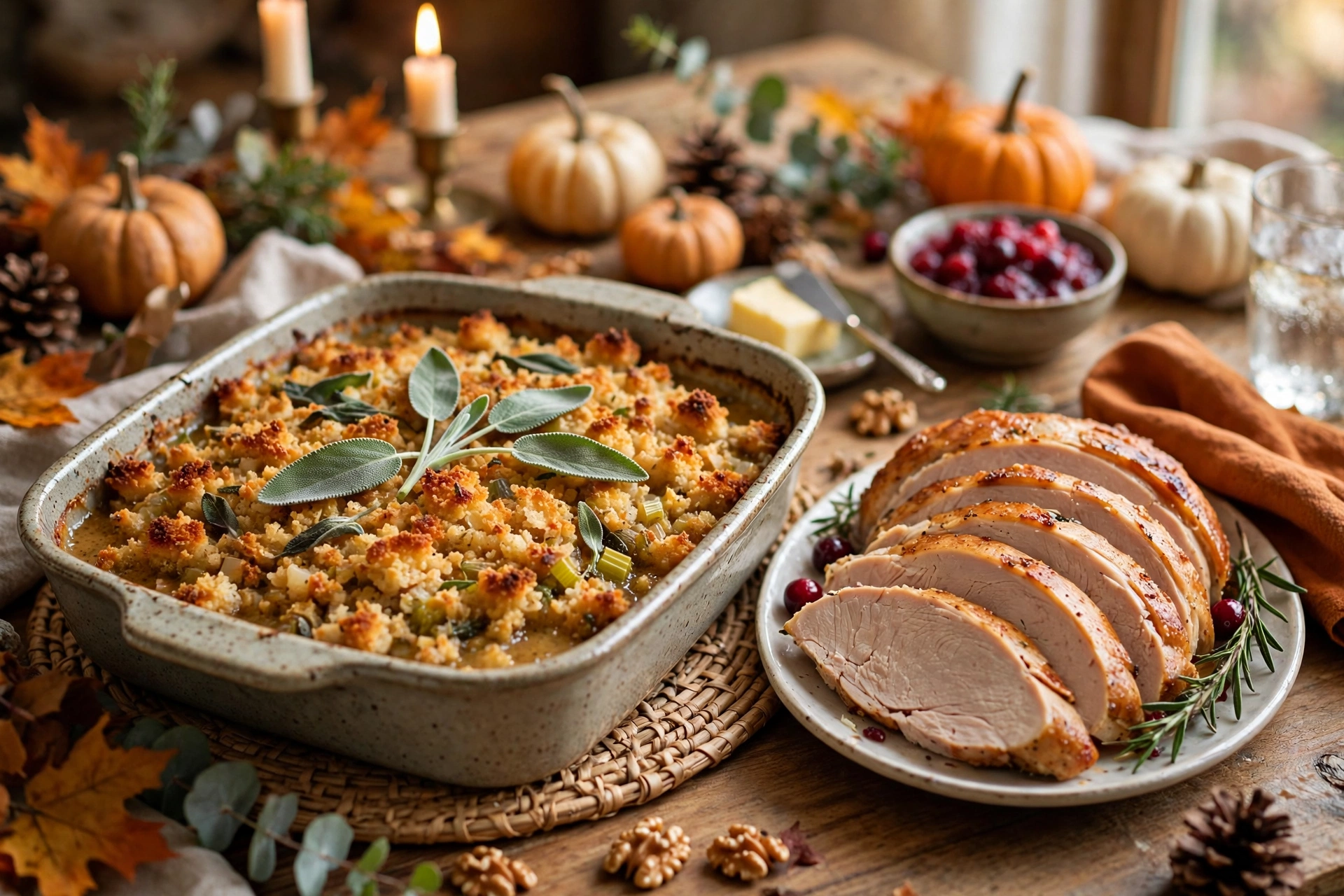

The dressing is the dish people ask about
Ask a family what they remember from last Thanksgiving and the turkey rarely comes first. It’s the dressing — the pan with the crispy top that got scraped clean while the turkey was still being carved. This easy dressing recipe for Thanksgiving is built for exactly that result: a moist, savory center and a top that actually crunches, made from homemade dressing with bread you dried yourself instead of a bag of crumbs.
And because dressing never travels alone, the second half of this guide solves the problem every host faces on Friday: a fridge full of turkey. You’ll get a USDA-based safety clock for the whole week, plus shredded turkey recipes organized by how much energy you actually have left.
Dressing vs. stuffing: the one distinction that matters
The words get swapped at most tables, but they mean different things. Stuffing is cooked inside the turkey’s cavity. Dressing is baked separately, usually in a casserole dish. The distinction matters for safety, not just vocabulary: the USDA advises cooking stuffing separately for the most even, reliable results, and if you do stuff the bird, the stuffing itself must reach 165°F at its center, checked with a food thermometer.
Baking dressing separately is also why this recipe works so well. The top gets direct oven heat, so it crisps instead of steaming, and there’s no guessing about whether the center of a stuffed bird is done. You control the texture from start to finish.
The recipe: classic bread dressing, crispy top, moist center
This serves 8 to 10 as a side. It takes about 20 minutes of hands-on work plus 45 to 50 minutes in the oven. The full menu around it — including the planning timeline and turkey sizing — lives in our Thanksgiving dinner planning guide.
Dry the bread a day ahead
Start with about 1 pound of sturdy white bread or sourdough, cut into 3/4-inch cubes — roughly 10 cups. Spread the cubes on sheet pans and leave them out overnight, or dry them in a 300°F oven for 15 to 20 minutes, stirring once, until they feel dry to the touch but not toasted brown. Dry bread is the whole secret: fresh, soft bread soaks up broth and collapses into mush, while dried cubes drink it up and hold their shape.
Sauté the onion and celery in butter
Melt 6 tablespoons of butter in a large skillet over medium heat. Cook 1 diced onion and 3 diced celery stalks with a good pinch of salt for 8 to 10 minutes, until soft and sweet-smelling but not browned. Stir in 1 tablespoon of chopped fresh sage (or 1 teaspoon dried) and 1 teaspoon of thyme, and cook for one more minute until fragrant. This butter-and-vegetable base is where the flavor lives — don’t rush it, and don’t skip the salt here, since unsalted bread needs it.
Mix it, then moisten it gradually
Tip the dried bread into your largest bowl and pour the onion mixture over it. Beat 2 large eggs with 2 cups of low-sodium chicken or turkey broth and pour that over the bread, tossing gently. The mixture should look damp all the way through but not swimming — add the third cup of broth a splash at a time only if the bread still looks dry in spots. Season with 1 teaspoon of salt and 1/2 teaspoon of black pepper, tasting a crumb to check. Over-wetting is the one mistake you can’t undo, so stop while it still looks a little shy of wet; the eggs and steam will finish the job in the oven.
Bake it covered, then uncovered
Butter a 9×13-inch baking dish, pack the dressing in loosely — don’t press it flat — and dot the top with 2 more tablespoons of butter. Cover tightly with foil and bake at 350°F for 30 minutes. Then uncover and bake 15 to 20 minutes more, until the top is deep golden and crisp at the edges and the center is set. Let it rest for 10 minutes before serving so the center firms up enough to scoop cleanly. If you’re finishing the meal with pie, our pumpkin pie recipe with evaporated milk bakes beautifully while the dressing rests.
The 5-day leftover safety clock
Leftovers are a second holiday only if they’re handled right. Every number here comes from the USDA and FoodSafety.gov, and the rule set is short enough to tape to the fridge.
Within 2 hours: get it into the fridge
Carve the turkey rather than refrigerating the whole bird — a whole carcass cools too slowly. Pack turkey and dressing into shallow containers and refrigerate within 2 hours of cooking. Bacteria multiply fastest between 40°F and 140°F, so the goal is to get food through that range quickly, not to let it cool on the counter first.
Days 1 to 4: the eating window
Refrigerated leftover turkey and dressing keep for 3 to 4 days. That means Thanksgiving-day leftovers are good through Sunday, and Monday is the cutoff, not a judgment call. Reheat everything to 165°F throughout, measured with a food thermometer, before serving — sauces and gravy should come to a rolling boil.
Day 4: freeze what you won’t finish
Anything you won’t eat by day 4 should go into the freezer on day 4 at the latest, in freezer-safe containers or bags with the air pressed out and the contents and date labeled. Frozen leftovers stay safe indefinitely at 0°F, and FoodSafety.gov puts their best quality window at 2 to 6 months. Thaw frozen portions in the refrigerator overnight, never on the counter.
Shred first: why shredded turkey beats sliced leftovers
Before you pack anything away, shred about half the leftover turkey by hand into bite-size pieces while it’s still slightly warm — it pulls apart easily now and turns stubborn after a night in the fridge. Sliced turkey only really works in a sandwich. Shredded turkey works in everything: it soaks up sauce in soup, crisps at the edges in a skillet, and disappears into tacos without anyone asking where the turkey went. Keep the shredded meat in its own container, separate from the sliced breast you want for sandwiches, and the whole week’s cooking gets easier. The same store-it-right logic applies year-round in our meal prep guide for beginners.
Leftover turkey ideas, by how much effort you have
The 15-minute day-after sandwich
The classic for a reason: sliced turkey, leftover dressing pressed into a patty and crisped in a buttered skillet, cranberry sauce, and a smear of mayonnaise on good bread. Crisping the dressing is the upgrade — it turns a side dish into the sandwich’s best layer.
The 20-minute turkey soup
Simmer shredded turkey with leftover vegetables, a handful of noodles or rice, and broth for 15 minutes, finishing with a squeeze of lemon and fresh herbs if you have them. This is the best use of the darker leg meat, which stays tender in soup long after it would dry out reheated on its own.
The 30-minute turkey tacos
Crisp shredded turkey in a hot, oiled skillet with a pinch of cumin and chili powder, then pile it into warm tortillas with leftover cranberry sauce thinned with a little lime juice as the salsa. It sounds odd and tastes like the best idea of the weekend.
The project-night turkey pot pie
When you have an unhurried evening, fold shredded turkey and leftover vegetables into a thick gravy, top with a single pie crust or a layer of leftover mashed potatoes, and bake until bubbling. It’s the one leftover meal that feels like a new dinner rather than a repeat.
What to do with leftover dressing
Leftover dressing keeps on the same 3-to-4-day clock as the turkey, and it reheats better than almost any other side — provided you reheat it the right way.
Crisp it in a skillet, never the microwave
The microwave makes dressing soggy. A buttered skillet over medium heat, pressed flat for a few minutes per side, brings back the crispy top and warms the center through. Add a splash of broth if the pan looks dry, and check that the center is steaming hot — 165°F if you’re checking with a thermometer.
Freeze it in meal-size portions
Press leftover dressing into muffin tins or small containers, freeze solid, then bag the portions. A single portion reheats in a skillet straight from the fridge after an overnight thaw and makes a fast lunch with soup — no full pan required.
One pan, one week of meals
That’s the real payoff of this recipe: Thursday’s dressing is the dish everyone asks about, and Friday through Sunday’s turkey is already half-cooked in your fridge, on a safety clock you can trust. Dry the bread a day ahead, bake the dressing uncovered at the end for the crunch, shred the turkey before it chills, and freeze by day 4. Do those four things and the holiday stretches gracefully instead of ending in a fridge clean-out on Monday.
Is dressing the same as stuffing?
No. Stuffing is cooked inside the turkey’s cavity, while dressing is baked separately in a casserole dish. The USDA advises cooking stuffing separately for the most even results, and stuffing cooked inside the bird must reach 165°F at its center.
How long do Thanksgiving leftovers last in the fridge?
Leftover turkey and dressing keep for 3 to 4 days in the refrigerator. Refrigerate them within 2 hours of cooking, in shallow containers, and reheat everything to 165°F before serving.
Can I make Thanksgiving dressing ahead of time?
Yes. Dry the bread cubes a day or two ahead, and assemble the dressing up to a day ahead and refrigerate it unbaked. Add a splash of broth if it looks dry, then bake as directed on Thanksgiving Day.
Can I freeze leftover turkey and dressing?
Yes. Freeze them in meal-size portions in freezer-safe containers or bags, labeled with the contents and date. Frozen leftovers stay safe at 0°F and are best quality within 2 to 6 months; thaw overnight in the refrigerator.
Why did my dressing turn out soggy or dry?
Soggy dressing usually means the bread wasn’t dried enough or too much broth was added — dry the cubes fully and add broth gradually. Dry dressing means too little liquid or too long uncovered — add a splash of broth and bake covered longer before the final uncovered crisping.
