

So, is San Antonio a good place to live? For most people asking that question, the honest answer is yes — with a few trade-offs you should go in with your eyes open. It is one of the cheapest big cities in America, it has real jobs, warm winters, and a culture that is genuinely lived in rather than put on for tourists. It also has summers that will test you, property taxes that eat into the savings, and a layout that all but requires a car.
This guide sticks to the numbers. Every figure below is dated and sourced, because a move is a big decision and “affordable” means nothing without the actual monthly cost.
San Antonio at a Glance
| What | The number | Source and date |
|---|---|---|
| City population | 1,526,656 | U.S. Census Bureau, July 1, 2024 estimate |
| U.S. city ranking | 7th largest | Census Bureau, 2024 |
| Metro population | More than 2.7 million | San Antonio–New Braunfels metro |
| Median home sale price | $299,275 | San Antonio Board of REALTORS, August 2026 |
| Average one-bedroom rent | About $1,300 a month | Pods rental data, 2026 |
| Cost of living | About 9% below the U.S. average | RentCafe / C2ER |
| Unemployment rate | 4.5% | Bureau of Labor Statistics, August 2026 |
| Summer highs | 92 to 96°F, June through August | NOAA climate normals |
| Annual rainfall | About 32 inches | NOAA climate normals |
The Short Answer
San Antonio works best for people who want big-city amenities without big-city prices. If you are a military family posted to Joint Base San Antonio, a remote worker keeping a salary earned elsewhere, a retiree chasing mild winters, or a buyer priced out of Austin, it is hard to beat. The median home costs roughly $113,000 less than Austin’s, there is no state income tax, and the winters are gentle.
It fits less well if you hate heat, need to live without a car, or want a walkable downtown lifestyle. San Antonio covers nearly 500 square miles, and outside a few central pockets, daily life happens behind a windshield.
What It Actually Costs to Live in San Antonio
Most guides quote the median home price and stop there. That tells you almost nothing. Here is what the median home costs each month, and where the hidden costs sit.
Buying a home: the monthly math
The San Antonio Board of REALTORS reported a median sale price of $299,275 in August 2026, unchanged from a year earlier, with 3,104 homes sold and 5.87 months of supply on the market. For comparison, the Austin metro median was $412,000 the same month. Homes took an average of 82 days to sell, so buyers have time to think — this is not a market that punishes a careful decision.
Run the numbers on that median home. With 20% down ($59,855), the loan is $239,420. At Freddie Mac’s average 30-year fixed rate of 7.11% (November 12, 2026), principal and interest come to about $1,611 a month. That is the loan alone. Property taxes, homeowners insurance, and any HOA dues sit on top, so budget the full payment, not the headline price.
The property tax catch
Here is the part the “no state income tax” headline leaves out. Texas funds its schools and local services through property taxes, and the bill is real. Rates are set separately by the county, the city, the school district, and special districts, so the combined rate changes from one address to the next. Always check the rate for the exact property, not the city average.
There is one big offset, and it got bigger in 2026. Texas voters approved Proposition 13 in November 2025, raising the standard school-district homestead exemption from $100,000 to $140,000. On a $299,275 home, that means school taxes are calculated on $159,275 instead of the full value. Homeowners 65 and older or with a disability get a further exemption on top, and the exemption also caps annual growth in the taxable value at 10%. You have to file for it: submit Comptroller Form 50-114 to your county appraisal district after you move in. It is free, it takes one form, and skipping it is the most common money mistake new Texas homeowners make.
Renting vs. buying
Renting is the cheaper way in. A one-bedroom apartment averages about $1,300 a month, and the average rent across the city runs about $1,524. Compare that with buying the median home: roughly $1,611 a month for principal and interest alone, plus several hundred more for taxes and insurance. Renting wins on monthly cash flow and flexibility, especially if you are new to the city and still choosing a side of town. Buying wins if you plan to stay put for years and want the payment to build equity instead of disappearing into rent. If you are moving without a job lined up, rent first.
Jobs and the Economy
San Antonio’s economy is broader than its reputation suggests. Joint Base San Antonio — Lackland, Randolph, Fort Sam Houston, and Camp Bullis — is the largest joint base in the Department of Defense, and its impact on the Texas economy was put at $55 billion in 2023. Around it sits a deep healthcare sector: the South Texas Medical Center is one of the largest medical complexes in the country, and Brooke Army Medical Center at Fort Sam Houston is the Defense Department’s largest hospital. USAA, H-E-B, Valero, and Frost Bank anchor the private sector from headquarters in the city.
The newer story is manufacturing and tech. Toyota announced a $3.6 billion expansion of its San Antonio plant in July 2026, adding a second assembly line and 2,000 jobs, and JCB’s $500 million equipment plant on the South Side started production in September 2026, expected to employ about 1,500 people at full strength. Cybersecurity keeps growing around the military’s cyber mission at Lackland, and UTSA merged with UT Health San Antonio in September 2025 to form the third-largest public research university in Texas.
The San Antonio–New Braunfels metro unemployment rate was 4.5% in August 2026, according to the Bureau of Labor Statistics. One honest caveat: average pay runs lower than in Dallas or Houston in some fields, because so much of the economy is government, service, and hospitality work. If your field pays far more in Austin, run the full comparison — the salary gap can wipe out the housing saving.
The Pros of Living in San Antonio
Housing you can actually afford
This is the headline, and it holds up. The cost of living runs about 9% below the national average, with housing roughly 25% lower, and the median home is well under $300,000 in a metro of 2.7 million people. That combination is rare in America now. New construction is still being built in volume on the far West Side, the South Side, and out toward New Braunfels, so buyers are not limited to bidding wars over old stock.
No state income tax
Texas collects no individual income tax on earned income. For a household moving from a high-tax state, that is a real raise. Just remember the other side of the deal: property taxes carry the weight instead, so the saving is biggest for renters and for homeowners who file the homestead exemption.
Food and culture you live in, not visit
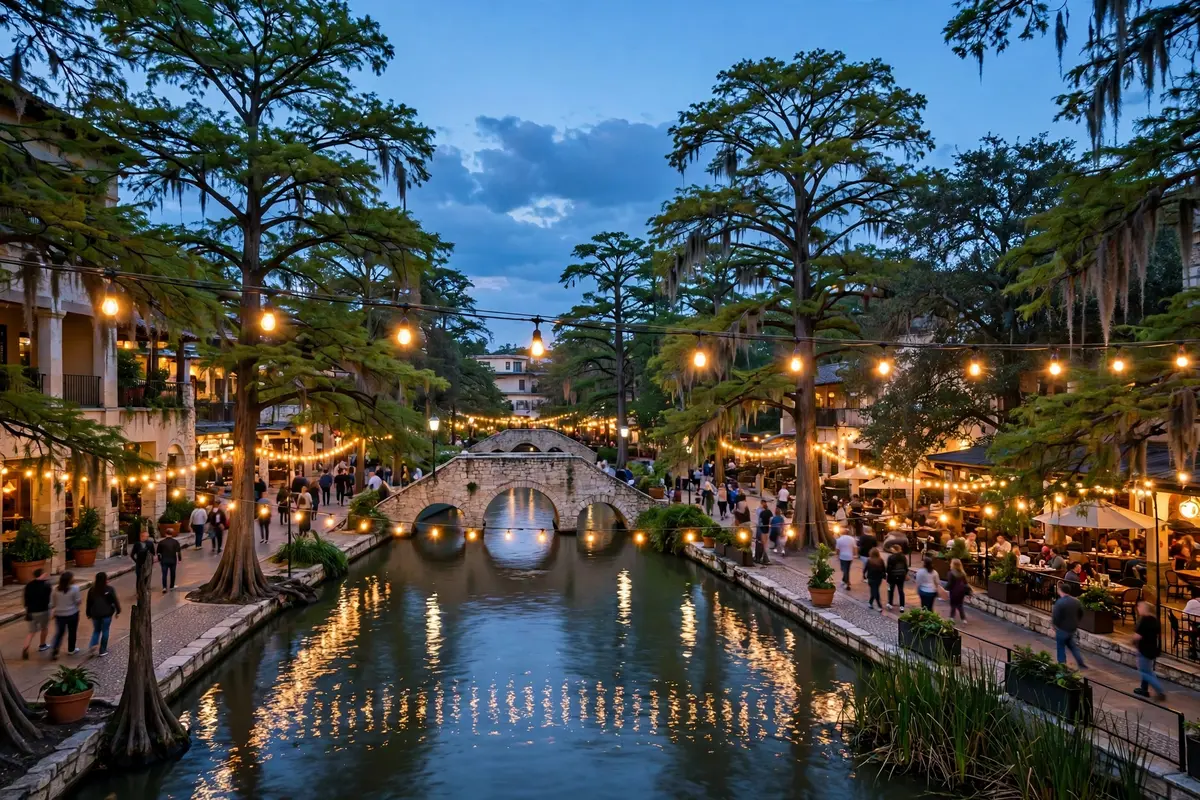
San Antonio has a strong claim as the birthplace of Tex-Mex, and the food scene backs it up — breakfast tacos are a daily staple, not a tourist event. The Alamo and the four other Spanish colonial missions form the only UNESCO World Heritage Site in Texas, and the River Walk runs about 15 miles from the Pearl through downtown to the Mission Reach. Fiesta takes over the city for 11 days every spring, and the Spurs, with five NBA championships, are a civic institution.
Mild winters and year-round outdoors
Winters are the payoff for the summers. Winter lows average in the low 40s, snow is rare, and the city gets roughly 220 days of sunshine a year. That means hiking, cycling, and patio dinners in January. The Hill Country is an hour away for wineries and river tubing, the Gulf Coast is a few hours’ drive, and Austin sits about 80 miles up I-35.
A genuinely family-friendly city
SeaWorld, Six Flags Fiesta Texas, the San Antonio Zoo, the DoSeum children’s museum, and Morgan’s Wonderland — a theme park built for children of all abilities — are all within a short drive. Add Brackenridge Park, the Japanese Tea Garden, and the city’s greenway trails, and weekends with kids rarely need a plan.
The Cons — the Honest Downsides
Summer heat is real
Average highs run 92 to 96°F from June through August, September still averages 90°F, and stretches above 100°F happen most summers. Air conditioning is not optional — it is a daily necessity and a real line in the household budget. Outdoor plans shift to mornings and evenings for four months of the year. If you have a health condition that makes heat dangerous, or you simply hate being hot, this is the deal-breaker to weigh first. Visit in August before you commit, not in February.
Property taxes take back some of the savings
As the section above shows, the tax bill on a median home runs into the thousands each year. The homestead exemption and the 10% appraisal cap help, but they do not make the bill small. Compare the total monthly payment — mortgage, tax, and insurance — not just the sale price.
You will need a car
San Antonio is spread across nearly 500 square miles, and about 80% of residents drive to work. VIA Metropolitan Transit runs buses, but coverage and frequency thin out fast outside the core, and most suburban neighbourhoods have no practical transit at all. The average one-way commute is about 25 minutes, which sounds fine until you are on I-35 through downtown or Loop 1604 in the northwest corridor at rush hour. The only genuinely walkable pockets are downtown, Southtown, and the Pearl.
Flooding and storms
South Central Texas sits in what forecasters call Flash Flood Alley, and heavy rain can turn a low-water crossing dangerous in minutes. The city averages about 32 inches of rain a year, but it arrives in bursts. Before buying any home, check the address on FEMA’s Flood Map Service Center and the City of San Antonio’s flood-risk resources, ask about drainage and elevation for the specific lot, and price flood insurance. This is a property-by-property check — one street can be fine and the next one not.
Allergies and air quality
San Antonio ranks among the top 40 allergy capitals in the country, mostly because of cedar pollen — “cedar fever” — which peaks in winter, with oak in spring, grass in summer, and ragweed in fall. Ozone levels also climb during hot, still summer weather. If you have allergies or asthma, expect year-round management.
Is San Antonio Safe?
Safety is the question the other guides mostly dodge, so here are the numbers. According to FBI crime reports compiled by CrimeGrade, San Antonio recorded about 5.9 violent crimes per 1,000 residents in 2024, against a U.S. average of 3.7. Property crime ran about 46 per 1,000, against a U.S. average of 18. That is higher than the national average, and it would be dishonest to say otherwise.
Two things matter more than the headline rate. First, the trend is improving: violent crime is down 17% since 2019, and it fell 15% in 2024 alone, with property crime down 14% the same year. Second, crime varies enormously by neighbourhood, as it does in every large city. The newer suburban and master-planned communities on the Northwest, Northeast, and far West sides report far lower rates than some central and South Side areas.
The practical move is to check the address, not the city. The San Antonio Police Department publishes a community crime map and a ZIP-code dashboard on the city’s website — look up any neighbourhood you are considering, and visit it at different times of day. The same approach works for any city: our guide to whether Charlotte, NC is safe walks through the same kind of check.
The Best Neighbourhoods for Different Lives
San Antonio is so spread out that the neighbourhood matters as much as the city. These are the areas that come up again and again, and who each one suits.
Alamo Heights
An affluent, independent municipality wrapped inside the city, with tree-lined streets, historic homes, and its own highly regarded school district. Consistently ranked among the best neighbourhoods for families — and priced like it.
Stone Oak
Far north San Antonio, master-planned and family-focused, with newer homes, top-rated schools in the North East Independent School District, and shopping and golf close by. Popular with professionals and families who want suburban comfort and do not mind the drive.
Southtown and the Pearl
The walkable, creative heart of the city. Southtown’s Victorian homes, galleries, and First Friday art walks draw artists and young professionals; the Pearl, rebuilt from the old brewery, has the farmers market, the Culinary Institute of America campus, and some of the city’s best restaurants. This is where to live if you want to walk to dinner.
Far West Side and Alamo Ranch
Where most of the new construction is landing. Master-planned communities along Loop 1604 and Culebra Road, close to the Medical Center, UTSA, USAA, and Lackland — a good fit for buyers who want a new home and a short commute to the big employers on the west side.
New Braunfels, Schertz, and Cibolo
Just outside the core, in Comal and Guadalupe counties. New Braunfels sits on the Guadalupe and Comal rivers, roughly halfway between San Antonio and Austin, with Gruene and Canyon Lake nearby. Schertz and Cibolo suit families tied to Randolph Air Force Base. The trade is a longer drive into the city for more space and a smaller-town feel.
Schools and Family Life
San Antonio is served by many school districts, and the boundaries do not follow obvious lines. The three largest inside the city are North East ISD, Northside ISD, and San Antonio ISD. Alamo Heights ISD is small and consistently rated among the best in the state, which is a large part of why homes there cost more. The Texas Education Agency publishes annual accountability ratings at txschools.gov, and the district covering a given address depends on the exact property — two houses on the same street can sit in different districts. Verify the campus assignment for any home before making an offer.
Who San Antonio Fits — and Who Should Think Twice
It fits
Military families posted to Joint Base San Antonio will find a city built around them, with base housing support, veteran services, and Brooke Army Medical Center. Remote workers keep the biggest win: a salary earned in a pricey city spent in a cheap one. Retirees get mild winters, lower housing costs, an extra homestead exemption at 65, and two major military hospitals. Healthcare workers have the Medical Center and the VA hospital within a few miles of each other. And buyers priced out of Austin get a similar Texas lifestyle for roughly $113,000 less on the median home.
Think twice
If you cannot tolerate 90-degree days for four months, the summer will wear you down — and air conditioning will cost you. If you need to live without a car, VIA will not cover most of the city well enough. If walkability is non-negotiable, only downtown, Southtown, and the Pearl will satisfy you. And if your field pays far more in Austin, Dallas, or Houston, model the whole picture before moving: a lower salary can cancel out cheaper housing.
Before You Move: Five Checks
Visit in August, not February. The city shows its kindest face in winter; you need to know what July feels like before you sign anything. Check the flood map for the exact address on FEMA’s Flood Map Service Center, and ask the seller about drainage and past flooding. Drive the commute at rush hour, from the neighbourhood you like to the office you will actually work at — a 25-minute average hides a 50-minute reality on the wrong corridor. Verify the school assignment for the exact property at txschools.gov. And once you buy, file the homestead exemption (Form 50-114) with the county appraisal district, and declutter your home room by room before you pack, so you are not paying movers to ship things you do not want.
The Bottom Line
Is San Antonio a good place to live? For most people, yes — it is affordable, warm, growing, and rich in food and culture, with a job base that is deeper than the stereotypes suggest. The trade-offs are specific and knowable: summer heat, property taxes, a car-dependent layout, and crime rates above the national average that vary sharply by neighbourhood. None of those is a reason to rule the city out. All of them are reasons to choose the neighbourhood carefully, run the monthly math honestly, and visit in August.
All figures in this guide are dated November 2026. Home prices come from the San Antonio Board of REALTORS August 2026 release, mortgage rates from Freddie Mac’s Primary Mortgage Market Survey for November 12, 2026, and crime figures from FBI reports for 2024. Prices, rates, and rents move monthly — recheck them before making an offer.
Is San Antonio a good place to live?
For most people, yes. It is one of the cheapest big cities in America, with a median home price of $299,275 in August 2026, no state income tax, and mild winters. The trade-offs are summer heat, property taxes, and a car-dependent layout.
Is San Antonio affordable?
Yes. The cost of living runs about 9% below the U.S. average, housing is roughly 25% lower, and the median home was $299,275 in August 2026. But property taxes are high, so compare the full monthly payment, not just the sale price.
Is San Antonio safe?
Crime runs above the national average — about 5.9 violent crimes per 1,000 residents in 2024 versus 3.7 nationally — but it is falling (down 15% in 2024) and varies sharply by neighbourhood. Check the San Antonio Police Department’s crime map for any address.
What are the biggest downsides of living in San Antonio?
Summer heat with highs of 92 to 96°F, high property taxes, car-dependent sprawl with limited transit, flash-flood risk, and severe cedar pollen allergies.
Is San Antonio better than Austin?
It depends on what you value. San Antonio’s August 2026 median home price was $299,275 versus Austin’s $412,000, and it is more laid-back with a military and healthcare job base. Austin is more walkable with higher pay in tech. The two cities are about 80 miles apart.
