
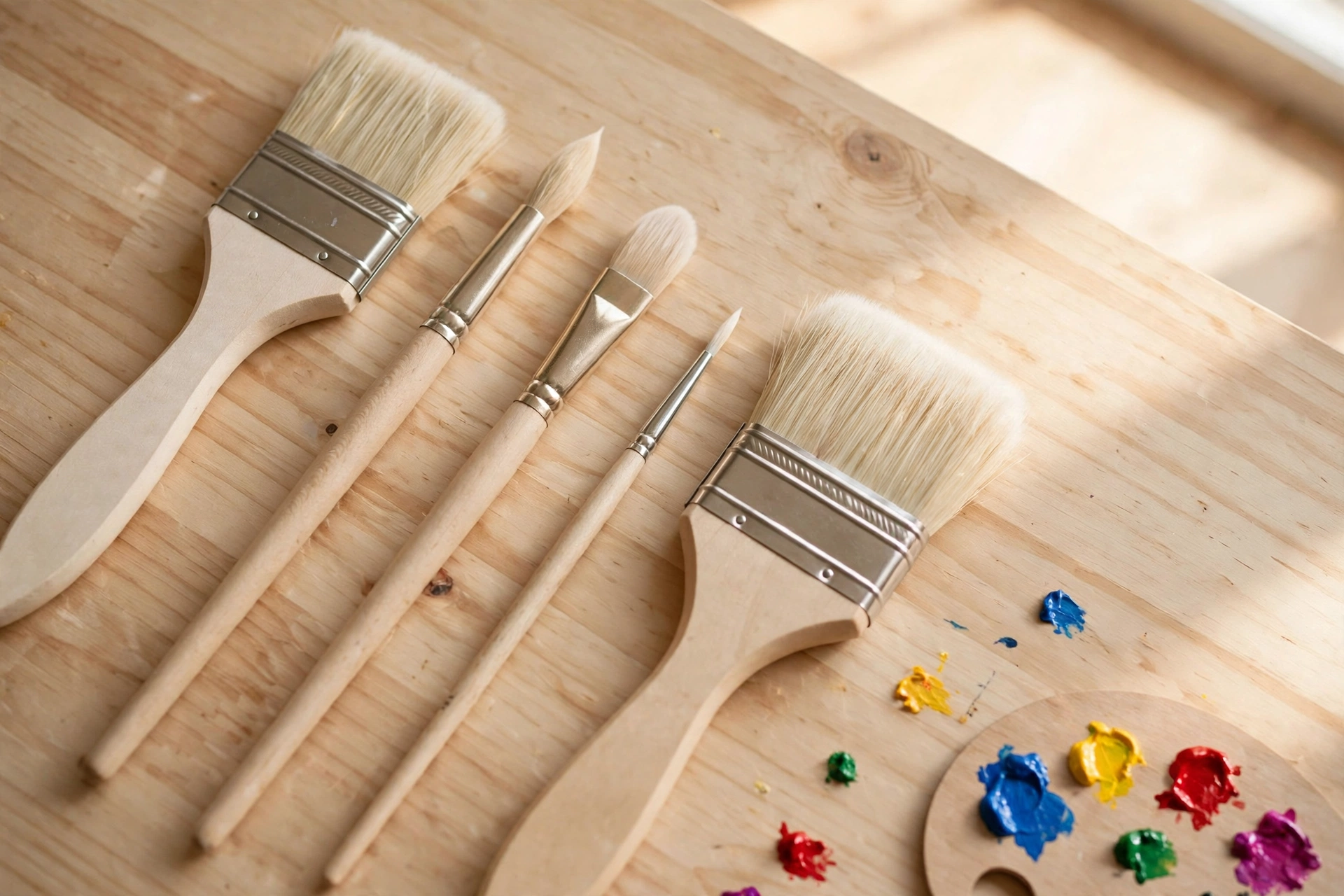

Walk into any art supply aisle and you’ll find a wall of brushes: twenty-piece sets in plastic sleeves, mysterious names like “filbert” and “rigger,” sizes numbered from 00000 to 20. Most beginners do the same thing I did on my first trip — grab the biggest, cheapest bundle and assume more brushes mean better paintings.
It doesn’t. That bargain set usually contains fifteen brushes you’ll never touch, made from bristles so flimsy they splay on first contact with paint. You need five brushes. Maybe four. This guide explains exactly which ones, why they work, and how to look after them — so you can stop shopping and start painting.
The 20-Piece Set Trap
Beginner brush sets look like a deal: twenty brushes for the price of two decent ones. The problem is what fills out the bundle. Most of those handles carry tiny, oddly shaped brushes — fan brushes, daggers, spot liners — that are specialty tools professionals reach for occasionally, not staples a beginner needs daily.
Worse, the bristles in bargain sets are usually ungraded synthetics with weak ferrules (the metal band holding the bristles). They shed hairs into your wet paint, lose their shape within weeks, and teach you nothing about how a good brush should feel. Five well-chosen brushes you use every session will always beat twenty you don’t.
The 5 Brushes Every Beginner Actually Needs
These five cover roughly every task a beginner faces: covering large areas, painting shapes, softening edges, adding detail, and signing your work. If budget is tight, the first three alone will carry you through your first dozen paintings.
1. A 3/4-inch flat — your workhorse
The flat is the brush you’ll reach for most. Its straight, chisel-like edge lays down bold blocks of color for skies, backgrounds, and underpainting, and turned on its side it draws crisp straight lines. A 3/4-inch (roughly 19mm) flat is the sweet spot for beginner canvas sizes — big enough to cover ground quickly, small enough for control. If you buy one brush today, make it this one.
2. A #6 or #8 round — your detail generalist
Round brushes come to a tapered point, which means the same brush can paint a thick stroke when pressed down and a hairline when touched lightly. A mid-size round (#6 or #8) handles everything from tree branches and petal shapes to writing your signature. It’s the most versatile shape there is, and beginners tend to underrate it.
3. A filbert — your blending secret
A filbert is a flat brush with a rounded tip — imagine a round brush that got flattened. That curved edge makes soft, rounded strokes that flats can’t: clouds, flower petals, skin tones, anything you want to blend. Many beginners discover the filbert late and wonder how they ever painted without it. Buy one early.
4. A small round (size #2 or #0) — your fine-detail tool
Eyes, whiskers, grass blades, tiny highlights — sooner or later every painting needs a few precise marks. A small round with a good point handles them. The key word is “point”: a cheap small brush with a blunt or splayed tip is useless, so this is the one brush where it’s worth spending slightly more, or testing the tip in the store before you buy.
5. A 1-inch wash brush — your speed tool
When you need to cover a whole canvas with a base tone or a gradient sky, the wash brush earns its keep. Wide, flat, and thirsty, it holds a lot of paint and water. It also doubles as a handy tool later for applying varnish to a finished painting — one more reason it earns a permanent place in the jar.
Synthetic or Natural Hair? The Honest Answer for Beginners
Brush hair matters, but less than the bundle-sellers want you to believe. Here’s the short version.
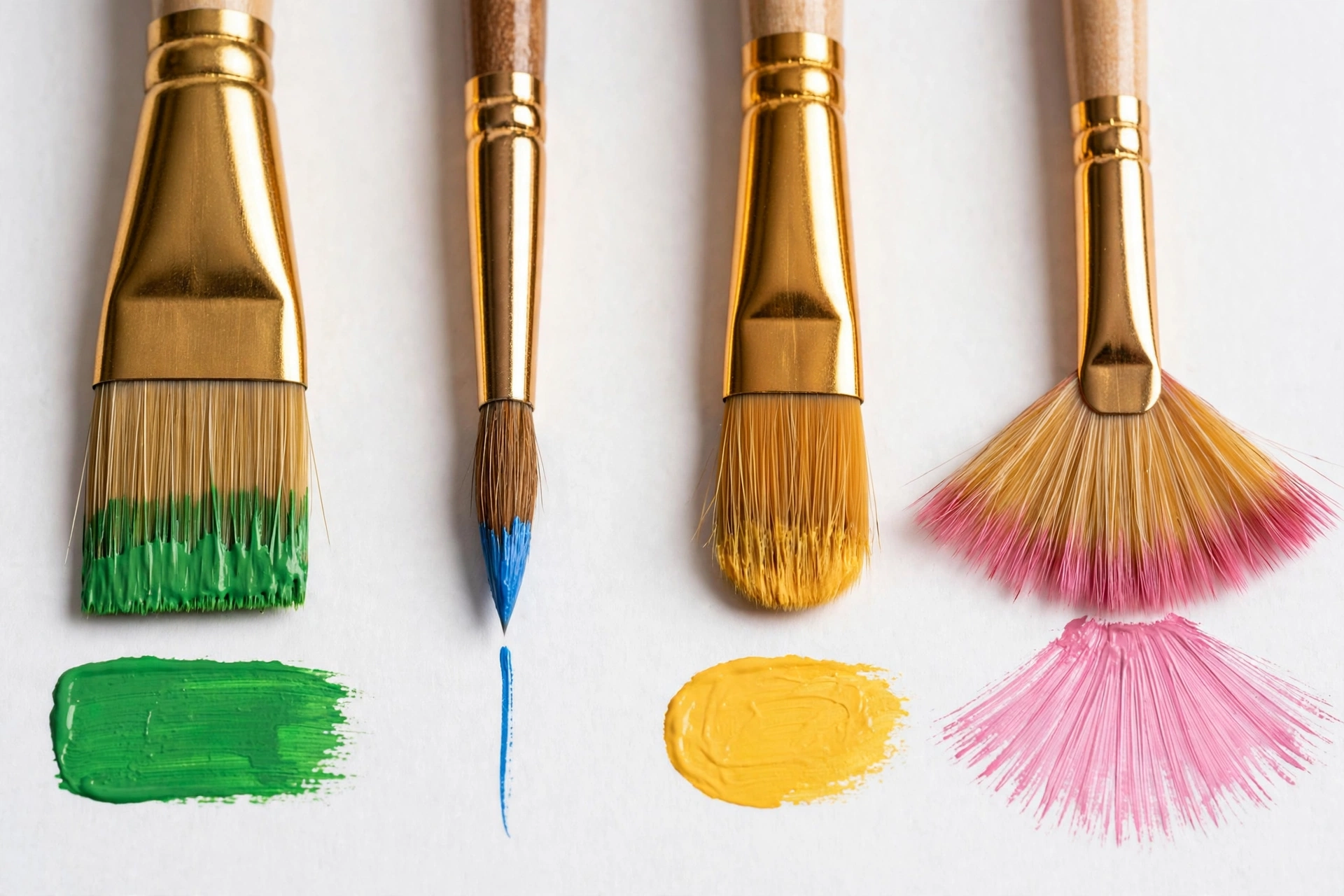
Natural hog hair: stiff, springy, and made for thick paint
Natural hog bristles are stiff, and each tip splits into tiny “flags” that hold more paint and release it evenly — a design nature perfected long before brushes had brand names. Hog brushes excel with heavy-body acrylics and bold, textured strokes. Their downside for beginners: they cost more, need more careful cleaning, and can feel unforgiving if you’re still learning control. As Winsor & Newton’s brush guide notes, hog quality varies enormously — cheap hog splays and fights you.
Synthetic (nylon or Taklon): the beginner-friendly choice
Modern synthetic brushes — often sold as nylon, polyester, or Taklon — are the smart default for anyone starting with acrylics. They’re affordable, hold a good point, bounce back after each stroke, and survive the rough treatment beginners inevitably dish out (leaving them in water, scrubbing too hard). Acrylic paint is mildly alkaline and rough on bristles; synthetics tolerate it better than most natural hair. Start here. Upgrade to hog later if you fall in love with thick, textured painting.
Brush Sizes, Decoded
Brush numbering confuses everyone at first, and manufacturers don’t help by using different systems. The basics: for round brushes, sizes run roughly 00000 (tiny) to 20 (huge), and bigger numbers mean bigger brushes. Flat and wash brushes are often labeled in inches or millimeters instead — a 3/4-inch flat is about 19mm wide.
Here’s what matters in practice: numbers aren’t perfectly standardized between brands, so a #8 from one maker may match a #6 from another. Don’t memorize charts. In the store, compare brushes side by side and choose by feel and visible size, not the number stamped on the handle. The five brushes above give you a full range regardless of brand quirks.
How to Make Even Cheap Brushes Last
Acrylic paint’s superpower — it dries fast and waterproof — is also your brush’s worst enemy. Paint that dries in the bristles is nearly impossible to remove and ruins the brush’s spring. Four habits prevent 90% of brush deaths.

Rinse while you paint, not after
Keep a jar of water on your table and swish the brush whenever you switch colors or pause. Don’t wait until the session ends — acrylic can start setting in bristles within minutes. A quick rinse between colors keeps paint from creeping up into the ferrule, where it hardens and permanently splays the bristles.
Never leave a brush standing in water
Soaking seems harmless, but a brush resting on its tip bends the bristles, and water wicking up into the wooden handle makes it swell and crack over time. If you must step away, lay the brush flat on a rag. The jar is for rinsing, not parking.
Wash with mild soap and reshape
At the end of a session, work a drop of mild soap (hand soap or a dedicated brush soap) through the bristles with your fingers, rinse until the water runs clear, then gently shape the tip back to a point or edge with your fingers. This thirty-second ritual is the single biggest factor in how long a brush survives.
Store flat or tip-up, never tip-down
Once clean and dry, store brushes with the bristles up in a jar or flat in a drawer. Tossing wet brushes tip-down into a bag mashes the bristles into whatever shape they dry in. Treat the tips like the precision tools they are.
Your First Shopping List
Print this and take it to the store (or the website). One trip, no regrets:
- 1 × 3/4-inch synthetic flat
- 1 × #6 or #8 synthetic round
- 1 × medium synthetic filbert
- 1 × #2 synthetic round (detail)
- 1 × 1-inch synthetic wash brush
That’s it. Five brushes, all synthetic, will handle every beginner painting project on this site — from your first sunset to your first portrait attempt. Total cost is typically less than one “professional” 20-piece set, and every brush will actually get used.
The Bottom Line
The art-supply industry profits from your uncertainty: the more confused you are, the more brushes you buy. Now you’re not confused. Five shapes, synthetic hair, one shopping trip — and then the brushes go quiet and the painting starts. When those first paintings are finished and you’re wondering what to do with them, our guide to selling your paintings online is waiting.
Can I use watercolor brushes with acrylics?
You can, but they won’t be happy about it. Watercolor brushes are soft by design, and acrylic paint is thicker and harsher — soft bristles wear out fast and struggle to push heavy paint around. Dedicated acrylic brushes (usually synthetic or hog) are built for the job and cost no more. Save your watercolor brushes for watercolor.
Do expensive brushes make a beginner paint better?
No — and this is liberating. A beginner’s biggest limits are practice and observation, not tools. A mid-priced synthetic brush in the right shape beats a luxury brush in the wrong shape every time. Spend your money on the five correct shapes first; upgrade individual brushes later as you discover which ones you reach for most. The detailed brush-type guide from Painters Online is a good reference if you want to explore shapes beyond these five.
How long should acrylic brushes last?
With decent care, a synthetic beginner brush lasts many months of regular painting; neglected ones die in weeks. The tell-tale signs of a dead brush: bristles that won’t return to a point after washing, shedding hairs, or a ferrule that wobbles. When one dies, replace just that brush — there’s no rule that says your set has to match.
What’s the best way to clean dried acrylic paint from a brush?
Honesty first: fully dried acrylic is essentially plastic, and no cleaning method restores a brush perfectly. Soak the bristles in warm (not hot) soapy water for an hour, then gently work the paint loose with your fingers or an old toothbrush, working from ferrule to tip. Dedicated brush cleaners can help with partially dried paint. Prevention — rinsing during the session — beats every cure.
The five brushes every acrylic painting beginner actually needs — what each one does and why.
Get a 3/4-inch flat synthetic brush
Your workhorse. Its straight, chisel-like edge lays down bold blocks of color for skies, backgrounds, and underpainting, and turned on its side it draws crisp straight lines.
Get a #6 or #8 round synthetic brush
Your detail generalist. The tapered point paints a thick stroke when pressed down and a hairline when touched lightly — from tree branches and petal shapes to your signature.
Get a medium filbert synthetic brush
Your blending secret. The rounded tip makes soft, rounded strokes that flats can’t: clouds, flower petals, skin tones, anything you want to blend.
Get a #2 small round synthetic brush
Your fine-detail tool for eyes, whiskers, grass blades, and tiny highlights. Choose one with a good point — this is the brush worth spending slightly more on.
Get a 1-inch wash synthetic brush
Your speed tool. Wide, flat, and thirsty, it covers a whole canvas with a base tone or gradient sky quickly, and later doubles for applying varnish.