
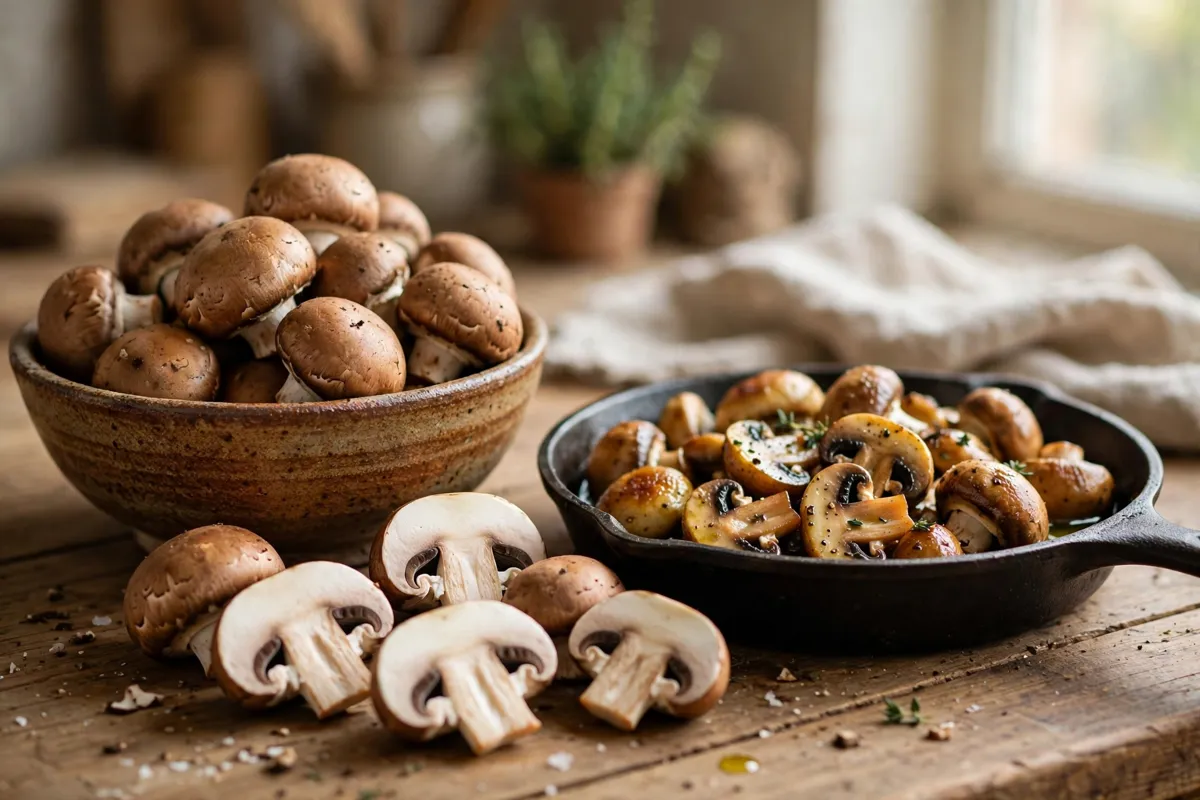

Walk past the mushroom shelf and you will see three familiar faces: small white buttons, big flat portobellos, and the brown mushrooms sitting between them. Those brown ones are cremini mushrooms, and they are the ones most cooks reach for without thinking twice. They cost a little more than white buttons, taste a little deeper, and hold up better in a hot pan.
This guide covers what a cremini mushroom actually is, how it differs from the white button and the portobello, what it tastes like, and how to clean, cook, store and freeze it — plus the questions people keep asking, like how long they last and what to use instead when the store is out.
What Are Cremini Mushrooms?
A cremini mushroom is a brown strain of Agaricus bisporus, the same species as the white button mushroom and the portobello. It is the middle stage: picked after the white button stage but before the cap opens out into a portobello. That is why it is often sold as a “baby bella” or “baby portobello” — it is, quite literally, a young portobello.
The name changes with the shop. You may see the same mushroom labelled cremini, crimini, baby bella, brown mushroom, Italian brown mushroom or baby portobello. In the UK it is usually called a chestnut mushroom. The spelling does not change the ingredient: if a recipe calls for crimini and your store sells cremini, buy the cremini.
Here is the detail most guides get slightly wrong. White buttons and cremini are not the same mushroom at different ages. They are two strains of one species. The white button is a white strain, picked young. The brown strain is picked closed as a cremini, and if it is left to grow, its cap opens and it becomes a portobello. A white button will never turn brown and grow into a cremini. That strain difference is also why cremini taste deeper than white buttons: the brown strain is firmer, holds less water, and browns better in the pan. The Kitchn’s guide to cremini mushrooms explains the same family tree in more detail.
Cremini vs White Button vs Portobello
All three are Agaricus bisporus. What changes is the strain and how long the mushroom was left to grow. The table below is the fastest way to pick the right one.
| Mushroom | Strain and stage | Size | Flavour and texture | Best for |
|---|---|---|---|---|
| White button | White strain, youngest | 1–2 inches | Mild, soft, high water content | Raw salads, quick sautés, soups |
| Cremini | Brown strain, middle stage | 1–2 inches, slightly larger | Earthy, savoury, firmer bite | Almost everything: pasta, sauces, roasts, stir-fries |
| Portobello | Brown strain, fully mature | 4–6 inches | Deep, meaty, umami-rich | Grilling, stuffing, burgers, steaks |
Price is the other difference shoppers notice. Cremini usually cost a little more than white buttons — in a year-long look at US grocery ads, cremini averaged about 15 cents more per 8-ounce pack. Portobellos cost more again, and you get fewer per pack because each cap is so large. For everyday cooking, cremini are the sweet spot: more flavour than a button, far cheaper and easier to use than a portobello.
What Do Cremini Mushrooms Taste Like?
Cremini mushrooms taste mild, earthy and savoury, with a slightly meaty edge. They have more depth than a white button but are nowhere near as intense as a portobello. The flavour gets stronger as they cook, because heat drives off water and lets the edges brown. That browning is where most of the flavour comes from — which is why the cooking method matters more than any seasoning you add. Raw, a cremini tastes faintly nutty and a little bland. Cooked, it turns rich and savoury. If a mushroom pasta ever tasted flat, the mushrooms were probably steamed in their own liquid instead of browned.
How to Buy Cremini Mushrooms
Good cremini are easy to spot once you know what to look for, and a bad pack is just as easy to avoid.
Look for these signs
Firm caps that feel dry to the touch, a light brown to rich brown colour, short pale stems, and a clean, earthy smell. Whole mushrooms rather than pre-sliced, if you have the choice — they keep longer and you control the cut.
Skip the pack if you see this
Slimy caps or a slimy film, dark wet mushy patches, a strong sour smell, or collapsed caps. A little darkening on the cap is normal as mushrooms age and does not mean they are bad — but slime and sour smell always mean they are done.
How to Clean Cremini Mushrooms
Most shop-bought cremini only need a light clean. Wipe each one with a damp paper towel or a soft brush to take off any dirt. If they are properly dirty, give them a quick rinse under cold water and pat them dry straight away.
What you should not do is soak them. Mushrooms are porous and act like little sponges, and a long soak leaves them waterlogged. Wet mushrooms steam instead of browning, and you lose exactly the flavour you bought cremini for. Clean them right before you cook, not before you store them — wet mushrooms spoil faster in the fridge. Trim the dry end of the stem if it looks woody, and that is all the trimming they need.
The stems are edible too
Do not throw the stems away. Cremini stems are edible and carry the same flavour as the caps. Slice them and cook them with the rest, chop them into a sauce or a soup, or save them for stock. The only time to remove them is when you are stuffing caps — and even then, chop the stems into the filling instead of binning them.
How to Cook Cremini Mushrooms
Cremini are forgiving, but they do have one rule: give them space and heat, or they will steam. Mushrooms are about 90% water. When they hit a hot pan they release that water, and if the pan is crowded the water has nowhere to go — the mushrooms sit in it and turn grey and rubbery. Spread them in a single layer, leave them alone for a minute or two, and let them brown.
Salt timing matters too. Salt draws water out of mushrooms, so if you salt at the start you flood your own pan. Add the salt after the mushrooms have released their moisture and started to brown. Garlic goes in near the end as well — it burns long before the mushrooms finish.
| Method | Heat | Time | Best for |
|---|---|---|---|
| Sautéed | Medium-high, oil or butter | 5–7 minutes | Pasta, eggs, toast, pan sauces |
| Roasted | 450°F (230°C) | 10–12 minutes | Side dishes, grain bowls, salads |
| Grilled | Medium heat | 3–5 minutes per side | Burgers, sandwiches, skewers |
| Stuffed and baked | 375°F (190°C) | 15–20 minutes | Party food, starters |
| In soups and stews | Simmer | 10–15 minutes | Broth, cream soups, braises |
Sautéed cremini mushrooms
This is the method you will use most. Clean the mushrooms and slice them evenly, about a quarter-inch thick. Heat a large skillet over medium-high heat with a tablespoon of olive oil or butter. When the fat shimmers, add the mushrooms in a single layer and leave them alone for the first minute or two so the undersides brown. Then stir now and then until they have released their liquid and it has cooked away, about 5 to 7 minutes in total. Salt them once they start to brown, add garlic and herbs in the last minute, and finish with a squeeze of lemon, a knob of butter, or a splash of soy sauce. If your pan is too small for the batch, cook in two rounds. Two good batches beat one soggy one every time.
Roasted cremini mushrooms
Roasting is the easiest way to cook a big batch, and it gives the deepest flavour. Heat the oven to 450°F (230°C). Toss whole or halved cremini with olive oil, salt and pepper, and spread them in a single layer on a parchment-lined baking sheet. Roast for 10 to 12 minutes until tender and browned at the edges — the same time and temperature A Couple Cooks uses for their roasted cremini. Garlic powder and thyme work well here. Serve them warm over grain bowls, tossed through pasta, or straight off the tray while you finish the rest of dinner.
Grilled cremini mushrooms
Leave them whole, toss with oil and a little balsamic vinegar, and grill over medium heat for 3 to 5 minutes per side until tender and lightly charred. They are good on skewers, tucked into burgers, or sliced over a salad. Keep the caps gill-side up for the first minute so the juices stay inside.
Stuffed and baked
Pull out the stems, fill the caps with breadcrumbs, cheese and herbs (with the chopped stems mixed in), and bake at 375°F (190°C) for 15 to 20 minutes until the filling is golden. They make an easy starter, and they are one of the simplest things to put on a holiday table — our Thanksgiving dinner planning guide has more ideas in the same spirit.
In soups, stews and sauces
Brown the mushrooms first, then add them to the pot. That one extra step is the difference between a soup that tastes like mushrooms and a soup that tastes like dishwater. They hold their shape in broth and stand up to long simmers in stews. They are also at home in stir-fries — try them sliced into a pan of kelp noodles with soy sauce and sesame oil.
How Much Cremini Mushroom Should You Buy?
Mushrooms shrink a lot, so buy more than you think you need. An 8-ounce pack holds roughly two and a half cups of whole mushrooms, and it cooks down to about one and three-quarter cups. As a rough guide, an 8-ounce pack serves two people as a side dish or stretches across a pasta for four. If mushrooms are the main event — a mushroom risotto, say — plan on 8 ounces per person and you will not run short.
How to Store Cremini Mushrooms
Cremini keep best when they stay dry, cool and able to breathe. The fridge is the right place; a sealed plastic bag is not.
In the fridge
Keep them unwashed in the fridge at 40°F (4°C) or below. If they are loose, a brown paper bag is better than plastic: it lets moisture out instead of trapping it against the caps. If they came in a sealed pack, keep them in it until you open it, then move the leftovers to a paper bag or a container lined with paper towel. Whole, unwashed cremini last 3 to 7 days in the fridge, according to the USDA FoodKeeper guide — use the shorter end if they were already a few days old when you bought them. Once sliced, the window drops to 2 to 4 days, and cooked mushrooms keep 3 to 4 days in a covered container. You can check the full storage times on the FoodSafety.gov cold food storage chart. For a full week of meals, sauté a double batch on Sunday and keep half for the week — it slots neatly into a meal prep routine.
Signs they have gone bad
Throw them out if they are slimy, sticky or mouldy, if they smell sour, or if the caps have gone soft and collapsed. Dark spots and a bit of wrinkling on their own are usually just age, not spoilage — but when in doubt, do not try to save questionable mushrooms for one more meal.
Can You Freeze Cremini Mushrooms?
Yes — but cook them first. Raw mushrooms frozen straight from the bag thaw into a soggy, rubbery mess, because the water inside them expands and breaks the cell walls. A quick sauté fixes that. Cook the sliced mushrooms in a hot pan for 5 to 7 minutes until the moisture has cooked off and the edges have started to brown. Let them cool completely, spread them in a single layer on a baking sheet, and freeze for an hour or two until solid. Then move them into freezer bags, squeeze the air out, and label with the date. Frozen this way they keep their flavour and shape for 9 to 12 months, and you can tip them straight from the freezer into pasta, soup or a stir-fry without thawing. Do not refreeze them once thawed.
Cremini Mushroom Nutrition
Cremini are light and surprisingly useful for their size. The numbers below are per 100 grams of raw cremini (about one cup of whole mushrooms), from the USDA FoodData Central database. Percentages are shares of the US daily value.
| Nutrient (per 100 g, raw) | Amount | Daily value |
|---|---|---|
| Calories | 22 kcal | 1% |
| Protein | 2.5 g | 5% |
| Carbohydrate | 4.3 g | 2% |
| Fat | 0.1 g | 0% |
| Selenium | 26 mcg | 47% |
| Copper | 0.5 mg | 56% |
| Riboflavin (vitamin B2) | 0.5 mg | 38% |
| Pantothenic acid (vitamin B5) | 1.5 mg | 30% |
| Niacin (vitamin B3) | 3.8 mg | 24% |
| Potassium | 448 mg | 10% |
Two things stand out. First, the selenium and copper: a single 100-gram serving covers about half of your daily need for each. Second, the B vitamins — riboflavin, niacin and pantothenic acid — which help your body turn food into energy. Vitamin D is the one thing not to count on: ordinary cremini have very little of it. Only packs labelled “vitamin D” or “UV-exposed” were grown under UV light, and those are the exception, not the rule.
Best Substitutes for Cremini Mushrooms
Any of these will work when the store is out of cremini. The swap changes the dish a little, so pick by what matters most in your recipe.
White button mushrooms
The easiest substitute, and the one you are most likely to find. They are milder and softer than cremini, and they release more water, so give them an extra minute in the pan and expect a gentler flavour. Use them one-for-one by weight.
Portobello mushrooms
The closest flavour match, since a portobello is just a grown-up cremini. Chop the caps into pieces about the size of a cremini, and remember the dark gills can turn a pale sauce grey — scrape them out with a spoon if the colour matters. Use about three-quarters of the weight you would use of cremini, because portobellos are denser once cooked.
Shiitake mushrooms
A step up in flavour: deeper, earthier, a little smoky. They are excellent in soups, stir-fries and sauces, but they will change the taste of the dish more than a button will. Remove the tough stems before cooking. They cost more, so save them for dishes where the mushroom is the star.
Oyster mushrooms
Tender and delicate, with a mild flavour that cooks in minutes. They work well in sautés and stir-fries when you want a softer texture. They shrink more than cremini, so buy a little extra.
When Cremini Mushrooms Aren’t the Best Pick
Cremini are the best all-round mushroom, but they are not the best at everything. For a raw salad, white buttons are better — they are milder, softer and cheaper, and raw cremini can taste a little flat and chewy. For a burger, a whole portobello cap wins: it is the right size, it grills like a steak, and a cremini is simply too small. And for a dish where the mushroom needs to stay pale, like a white cream sauce, the brown colour of cremini will tint it. None of this is a flaw. It is just a matter of picking the right mushroom for the job — and most of the time, that mushroom is the cremini.
6 Mistakes to Avoid With Cremini Mushrooms
Crowding the pan
The most common mistake, and the one that ruins the most mushroom dishes. Mushrooms need space to brown. If they are piled on top of each other they steam in their own liquid. Use a bigger pan or cook in batches.
Salting too early
Salt pulls water out of the mushrooms. Salt at the start and you flood the pan before it has a chance to brown anything. Wait until the mushrooms have released their moisture and started to colour.
Washing them before storing
Wet mushrooms spoil faster. Store them dry and unwashed, and clean them right before cooking.
Soaking them in water
A quick rinse is fine. A soak is not. Mushrooms absorb water fast, and soaked mushrooms will never brown properly.
Throwing the stems away
The stems are edible and full of flavour. Slice them, chop them into a sauce, or save them for stock.
Buying a slimy pack to save a trip
Slimy or sour-smelling mushrooms are already spoiled, and no amount of cooking fixes that. If the pack looks bad, leave it on the shelf.
Cremini mushrooms earn their place as the default mushroom for a simple reason: they are the middle of everything. More flavour than a white button, easier to cook with than a portobello, cheap enough for a weeknight and good enough for a dinner party. Buy them firm and dry, keep them in a paper bag, give them a hot pan with room to brown, and they will do the rest.
Are cremini mushrooms the same as baby bella mushrooms?
Yes. Baby bella is just another name for the same mushroom. Cremini, crimini, baby bella, brown mushroom and Italian brown mushroom all refer to the same small brown mushroom, and you can use them exactly the same way in recipes.
Are cremini mushrooms the same as white button mushrooms?
They are the same species, Agaricus bisporus, but not the same strain or stage. White buttons are a white strain picked young, while cremini are a brown strain picked at a middle stage. Cremini are firmer, browner and more flavourful, and a white button will never grow into a cremini.
How long do cremini mushrooms last in the fridge?
Whole, unwashed cremini mushrooms last 3 to 7 days in the fridge, according to the USDA FoodKeeper guide. Once sliced, use them within 2 to 4 days, and cooked mushrooms keep 3 to 4 days in a covered container. Store them dry in a paper bag, not a sealed plastic bag.
Can you eat cremini mushrooms raw?
You can, but they taste much better cooked. Raw cremini taste faintly nutty and a little bland, and they can be chewy. Cooking browns them and brings out their earthy, savoury flavour, so sautéing, roasting or simmering them gives a far better result.
Can you freeze cremini mushrooms?
Yes, but cook them first. Sauté the sliced mushrooms for 5 to 7 minutes until the moisture has cooked off, let them cool completely, flash-freeze in a single layer, then bag them. Frozen this way they keep for 9 to 12 months. Raw mushrooms frozen straight from the bag thaw soggy and rubbery.
