
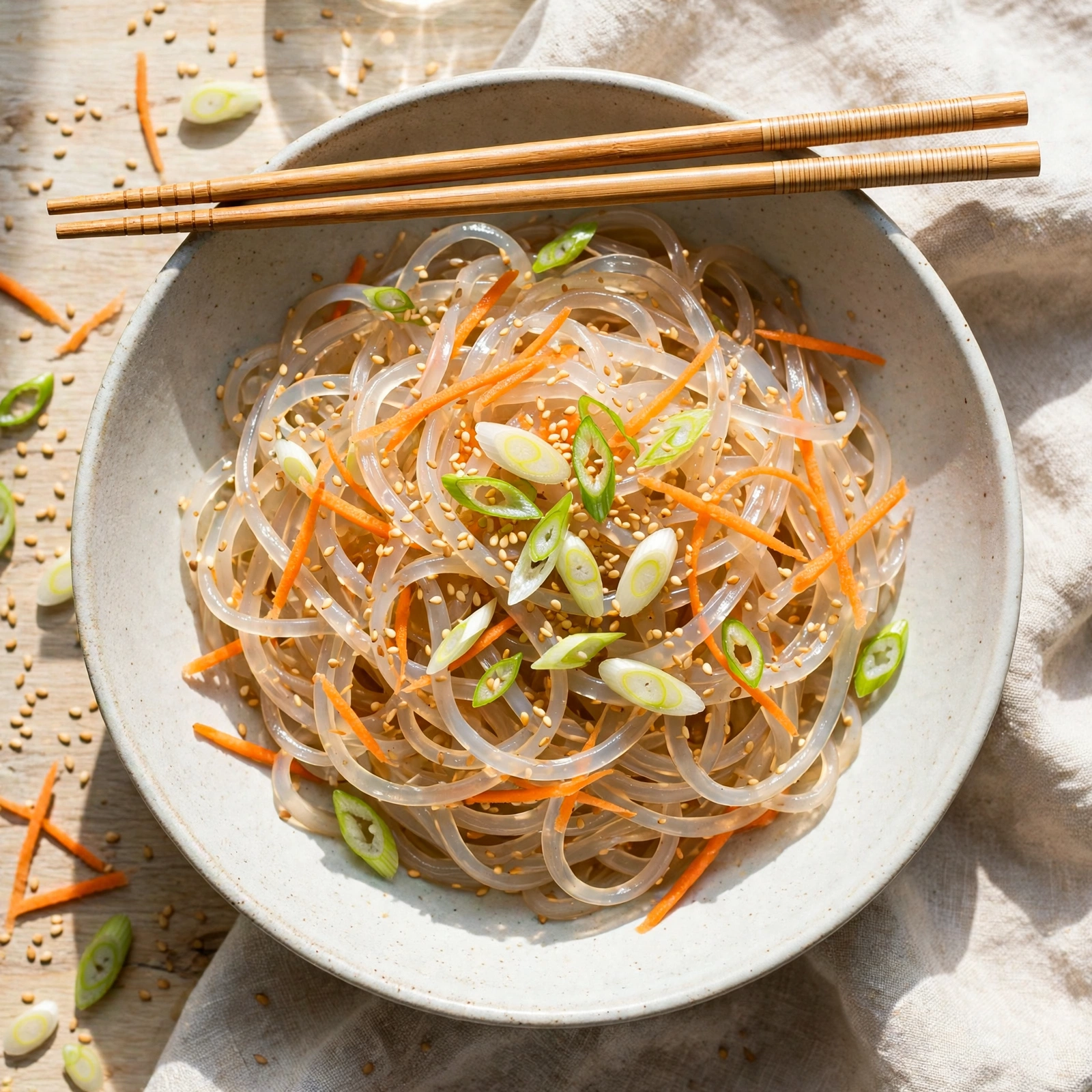

Open a bag of kelp noodles for the first time and you might wonder what you have bought. They are clear, a little crunchy, and they sit in a salty liquid that smells faintly of the sea. They do not look like pasta. They do not behave like pasta, either.
Give them ten minutes, though, and they turn into something genuinely useful: a light, gluten-free noodle that soaks up whatever sauce you put on it. Here is what they are, how they taste, how to soften them, and where they shine — plus where they fall flat.
What Are Kelp Noodles?
Kelp noodles are thin, semi-transparent noodles made from kelp, a type of brown seaweed. They were first developed in Korea, where they are called cheon sa chae. The American brand Sea Tangle was the first company to make them in the United States, back in 2001, and the idea has spread from there.
The ingredient list is short: peeled kelp, sodium alginate, and water. Sodium alginate is a salt that occurs naturally in the cell walls of kelp. It is what gives the noodles their springy, slightly chewy bite. Nothing else goes in — no wheat, no egg, no starch.
That short list is the whole point. Because there is no grain and no starch, kelp noodles are naturally gluten-free, vegan, and very low in calories and carbohydrates.
What Do Kelp Noodles Taste Like?
Almost nothing — and that is a compliment. Once rinsed, kelp noodles have a mild, neutral flavour. They are not fishy: raw kelp can taste of the sea, but by the time it has been processed into noodle form, that flavour is mostly gone. What is left is texture.
Straight from the bag they are crunchy, almost rubbery. After a quick soak they turn silky and smooth, with a light bite that sits somewhere between glass noodles and al dente pasta. They never go soft and starchy the way wheat noodles do. Instead, they pick up the flavour of whatever you toss them with — sesame oil, chilli, peanut sauce, pesto. The noodle is the vehicle. The sauce does the talking.
Kelp Noodle Nutrition: What Is Actually in the Packet?
Here is what a typical packet label shows, for a 4-ounce (about 115 g) serving of Sea Tangle kelp noodles:
- Calories: 6
- Fat: 0 g
- Carbohydrate: 1 g
- Dietary fibre: 1 g
- Sugar: 0 g
- Sodium: 35 mg
- Calcium: 15% of the daily value
- Iron: 4% of the daily value
Those numbers are so low that people sometimes assume the label is wrong. It is not — the noodles are mostly water and seaweed fibre. Brands do differ a little, though. Some labels list 3 g of carbohydrate and around 65 mg of sodium for the same serving size, so check your own packet rather than memorising one set of numbers. Beyond the label, kelp brings trace minerals with it: calcium, iron, iodine, and vitamin K.
Kelp Noodles vs Glass Noodles vs Shirataki vs Regular Pasta
Kelp noodles get confused with glass noodles constantly, because they look alike in the bag. They are not the same food.
| Noodle | Made from | Calories | Carbs | Gluten-free | Texture |
|---|---|---|---|---|---|
| Kelp noodles | Kelp, sodium alginate, water | Very low (about 6 per serving) | Very low | Yes | Crunchy, then silky |
| Glass noodles | Starch (mung bean or potato) and water | Moderate | High | Yes | Soft, slippery |
| Shirataki noodles | Konjac yam fibre and water | Very low | Very low | Yes | Chewy, can smell fishy |
| Wheat pasta | Wheat flour, water, sometimes egg | High | High | No | Soft, starchy |
Glass noodles are starch, so they behave like pasta: they go soft when cooked and they carry a real carb load. Shirataki noodles are the closest match to kelp noodles on calories, but many people find they smell faintly fishy straight from the packet, while kelp noodles do not. Wheat pasta is the odd one out — the only one of the four that contains gluten, and the only one that thickens a sauce with its own starch.
Rule of thumb: if you want a noodle that disappears into the sauce, pick kelp. If you want a noodle that thickens the sauce, pick wheat pasta.
How to Prepare Kelp Noodles
This is the step most people get wrong. Kelp noodles need no boiling and no long soak. What they need is a rinse and a short acid bath. Skip it, and they stay rubbery. Overdo it, and they fall apart.
Step 1: Rinse Them Well
Tip the noodles into a colander and rinse them under cold running water for a good minute. This washes away the salty packing liquid. Give them a gentle squeeze as you rinse. If they still smell briny, rinse again.
Step 2: Soften Them With Lemon and Baking Soda
There are two ways to do this, and they give different results.
The quick method (1 minute). Put the rinsed noodles in a bowl with a little water, add 1 tablespoon of baking soda and the juice of half a lemon (or a couple of teaspoons of vinegar). You will see bubbles form — that is normal. Massage the noodles gently with your hands for no more than 1 minute, then rinse well. The noodles come out silky with a light bite left in them. This is the method to use for salads and stir-fries.
The slow soak (10 to 15 minutes). Put the rinsed noodles in warm water with 1 tablespoon of lemon juice and leave them for 10 to 15 minutes, then drain and rinse. They come out softer and closer to a cooked noodle. Use this one when the noodles are the main event, like a pad thai swap.
Either way, rinse again after the soak. Leftover baking soda tastes soapy, and leftover lemon makes the noodles sour.
Step 3: Cut Them Shorter
Kelp noodles come very long. Take kitchen scissors and snip them into shorter strands before you sauce them. Shorter strands mix evenly with vegetables and sauce, and they are much easier to eat.
Three Mistakes That Ruin Kelp Noodles
First, soaking them for hours. Kelp noodles keep softening over time, and an over-long soak turns them mushy and fragile. Set a timer. Second, skipping the rinse — the packing liquid is salty, and it will season your whole dish whether you want it to or not. Third, boiling them like pasta. They do not need it, and a hard boil makes them go limp.
5 Easy Ways to Use Kelp Noodles
Once they are softened, kelp noodles are ready for anything a light noodle can do. Here are five starting points.
1. Cold Sesame Noodle Salad
This is the easiest win. Toss softened kelp noodles with shredded carrot, cucumber, and red pepper, then dress with sesame oil, rice vinegar, soy sauce, and a spoonful of peanut butter. Add chilli flakes if you like heat. It keeps well in the fridge, so it is a good one to make ahead — and if you grow your own tomatoes, a few halved cherry tomatoes on top work nicely.
2. Stir-Fry
Heat your wok, cook your vegetables and protein first, then add the softened noodles right at the end. Two or three minutes is enough — just long enough for them to warm through and drink in the sauce. Add them any earlier and they overcook. A sesame chicken stir-fry is a good template: the noodles pick up the sauce and stay springy.
3. Soup
Drop softened kelp noodles into hot soup in the last few minutes of cooking. They are good in miso soup with mushrooms, or in a light chicken broth with greens. Do not simmer them for the whole cooking time. They will keep softening in the hot broth, so take the pot off the heat once they are in.
4. Pad Thai Swap
Pad thai usually uses rice noodles. Swap in kelp noodles and the dish keeps its sweet-sour-peanut character with a fraction of the carbs. Use the slow-soak method so the noodles are soft, then toss them in the pan with the sauce, bean sprouts, and spring onion.
5. Pesto “Pasta”
Warm the softened noodles gently in a pan with a spoonful of pesto and a splash of warm water. The pesto clings to the silky strands, and the dish tastes like pasta night without the pasta. Add capers or toasted pine nuts on top for crunch. This one takes about five minutes.
Where Kelp Noodles Do Not Work
Kelp noodles are not a universal pasta replacement. They fail in three places.
Long-simmered dishes are the first. A noodle that needs forty minutes in a stew will not survive it — kelp noodles go soft and break apart. Add them at the end, or not at all. Baked pasta dishes are the second: kelp noodles do not hold their shape in a hot oven the way wheat pasta does, and they release water instead of absorbing it. And third, any sauce that depends on pasta starch to thicken will stay thin, because kelp noodles give off no starch at all.
None of that is a flaw. It is just the trade-off for a noodle with almost no calories. Pick the right dish, and you will never notice the swap.
Where to Buy Kelp Noodles and How to Store Them
You will find kelp noodles in most Asian grocery stores, in the noodle aisle or the chilled section. Health food stores like Whole Foods stock them too, and they are easy to order online. A 12-ounce pack usually costs around $3 to $5.
Unopened packs keep in the pantry until the date on the bag. Once opened, keep any leftover noodles in a container of fresh water in the fridge and use them within a few days, changing the water daily. And never freeze kelp noodles — freezing turns them to mush, and there is no way back from it. A pack in the pantry plus a simple meal prep routine covers a lot of busy weeknights.
Are Kelp Noodles Healthy? And Who Should Go Easy
For most people, kelp noodles are a healthy swap: very low in calories, gluten-free, vegan, and a source of calcium, iron, fibre, and vitamin K. They are also keto-friendly and fit paleo and raw-food eating patterns.
The one thing to watch is iodine. Kelp is naturally rich in iodine, which your thyroid needs to make its hormones — but too much iodine can disturb thyroid function, in much the same way as too little. The National Institutes of Health sets the adult recommended daily amount of iodine at 150 micrograms, and the tolerable upper limit at 1,100 micrograms a day from all sources combined. A normal serving of kelp noodles sits well below that, but the iodine adds up across a day if you also eat other seaweed, take a supplement, and use iodised salt.
So enjoy kelp noodles as part of a varied diet, not as an everyday staple in large amounts. If you have a thyroid condition, are pregnant, or take thyroid medicine, talk to your clinician before making kelp foods a regular habit. This article is general information, not medical advice.
Are Kelp Noodles Keto, Vegan and Gluten-Free?
Yes to all three. With about 1 g of carbohydrate per serving and no animal ingredients, kelp noodles fit keto, vegan, paleo, and gluten-free eating without any adjustment. Raw-food cooks use them too, served with a raw sauce and warmed gently rather than cooked.
What are kelp noodles made of?
Kelp noodles are made from just three things: peeled kelp (a brown seaweed), sodium alginate — a salt found naturally in kelp’s cell walls — and water. They contain no wheat, egg, or starch, so they are naturally gluten-free and vegan.
Do kelp noodles taste fishy?
No. Once rinsed, kelp noodles taste almost neutral, not fishy at all. Their flavour comes from the sauce you toss them in. If your first bite tastes salty, rinse them again — the salty taste comes from the packing liquid, not the noodle.
Do you need to cook kelp noodles?
No, kelp noodles are safe to eat raw. Most people soften them first with a quick soak: 1 tablespoon of baking soda and the juice of half a lemon in a bowl of water, massaged for 1 minute, then rinsed. For a softer noodle, soak in warm water with lemon juice for 10 to 15 minutes instead.
Are kelp noodles the same as glass noodles?
No. They look alike, but glass noodles are made from starch (mung bean or potato) and carry a real carb load, while kelp noodles are made from seaweed and have about 6 calories and 1 gram of carbohydrate per serving. Glass noodles go soft when cooked; kelp noodles stay springy.
Are kelp noodles good for weight loss?
They can help keep a meal light, because a 4-ounce serving has about 6 calories and 1 gram of carbohydrate. They work best as a swap for a starchy noodle in salads, stir-fries, and soups — but they are not a meal on their own, so pair them with protein and vegetables.
