
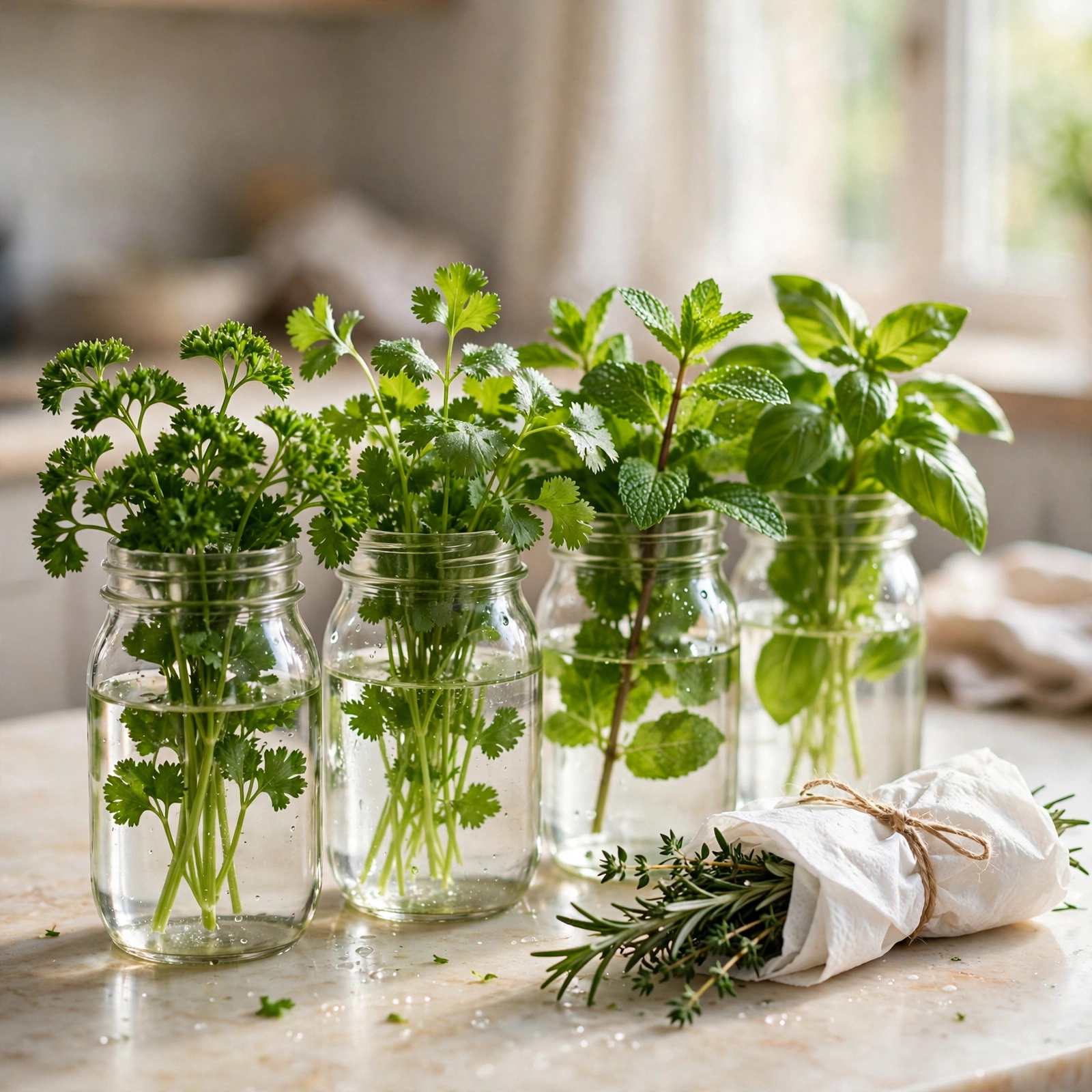

You know the scene: you buy a beautiful bunch of cilantro on Saturday, full of plans for tacos, and by Tuesday it’s a sad green puddle in the crisper drawer. Fresh herbs are some of the most wasted food in the average kitchen — not because they spoil fast, but because most of us store them all the same way, which is wrong for about half of them.
The fix isn’t complicated. Herbs fall into two families — tender and woody — and each family has one storage method that keeps it fresh for weeks instead of days. Learn the system once and you’ll stop throwing money away with every grocery run. Here’s how to store fresh herbs, method by method.
The One Decision That Changes Everything: Tender vs. Woody
Forget treating every bunch the same. The single most useful thing you can know about herb storage is whether your herb is tender or woody, because the two groups want opposite things.
Tender (soft) herbs — parsley, cilantro, mint, dill, tarragon, chives — have soft stems and wilt quickly. They drink through their stems, so they want to stand in water like cut flowers.
Woody herbs — rosemary, thyme, oregano, sage, marjoram — have stiff, wood-like stems and lower moisture content. They don’t need a drink; they need a humid, protected wrap.
Match the herb to its method and you’re already ahead of most cooking blogs. The European Food Information Council recommends exactly this split: soft herbs upright in a glass of water with a bag over the top in the fridge, woody herbs wrapped in damp kitchen paper in a sealed container. Here’s each method, step by step.
How to Store Soft Herbs: The Flower Method
This is the jar-in-the-fridge trick that turns a five-day bunch of cilantro into a two-week one. University extension guidance (Oregon State, cited via agricultural reporting) says soft herbs like parsley, cilantro, and mint can last up to several weeks in a jar of water in the fridge.
Step 1: Trim the stems
Snip about a centimeter off the bottom of the stems, just like you would with fresh flowers. A fresh cut lets the stems take up water instead of sitting on sealed-over ends.
Step 2: Stand them in a jar of water
Put the bunch upright in a glass jar or mason jar with a few inches of water — enough to cover the stem ends, not the leaves. Loosely drape a plastic bag or produce bag over the top. The bag traps humidity around the leaves without pressing on them.
Step 3: Refrigerate (except basil)
Set the jar in the fridge. Change the water every two to three days, re-trimming the stems each time if the ends look slimy. This one habit is what separates the two-week bunch from the one that dies on day four.
How to Store Woody Herbs: The Damp-Towel Method
Rosemary, thyme, oregano, and sage don’t want the flower treatment — standing them in water speeds up rot on their dense foliage. They want a damp wrap.
Step 1: Wrap in a damp paper towel
Lightly dampen a paper towel (wring it out well — damp, not dripping) and roll the herb sprigs inside it. The towel holds humidity against the leaves while absorbing the excess moisture that causes rot.
Step 2: Bag and refrigerate
Slide the wrapped bundle into a resealable bag or an airtight container and keep it in the fridge. Check the towel every few days and re-dampen if it’s dried out.
Why this works better for woody herbs
Woody herbs have naturally low moisture and tough leaves — they’re built to endure. Under optimal cold storage, postharvest researchers at UC Davis put the shelf life of rosemary, thyme, oregano, and sage at three to four weeks at 32°F. Your home fridge runs warmer (around 37–40°F), so expect a more realistic two to three weeks — still dramatically better than the few days a loose bunch survives in the crisper.
The Basil Exception: Keep It Out of the Fridge
Here’s where most “one method for all herbs” guides go wrong: basil hates the cold. Store basil in the fridge and the leaves turn brown or black within days. This isn’t anecdote — UC Davis postharvest research found basil suffers chilling injury below 12°C (about 54°F), showing brown discoloration between the leaf veins, stem browning, and loss of aroma. A standard home fridge runs 34–40°F, far below basil’s comfort zone. The European Food Information Council puts it plainly: basil doesn’t tolerate cold well and should be stored above 10°C, away from direct sunlight.
How to store basil at room temperature
Trim the stems, stand the bunch in a jar of water on the counter away from direct sun, and change the water regularly. Treated this way, basil stays fresh for roughly a week to ten days (a widely cited range from cooking sources; postharvest research focuses on the temperature threshold rather than home countertop durations). If you absolutely must refrigerate it, keep it dry, wrapped, in the warmest part of the fridge — and use it within two or three days.
Freezing Herbs: The Oil-Cube Method
Bought more than you can use fresh? Freezing is the easiest preservation method for herbs — and unlike most vegetables, herbs don’t need blanching first. Michigan State University Extension explicitly lists fresh herbs among the vegetables that do not require blanching before freezing.
Chop and freeze in oil or water
Rinse the herbs, shake off the excess water, and chop them coarsely. Pack generous pinches into ice-cube trays, cover with water or olive oil, and freeze. Once solid, transfer the cubes to freezer bags or airtight containers. The University of Saskatchewan’s extension guidance recommends oil for savory herbs like basil, sage, thyme, and rosemary. The same water-tray method is recommended by the University of Georgia’s extension service — which hosts the National Center for Home Food Preservation: rinse quickly, shake off the excess, chop coarsely, and freeze in water-filled ice-cube trays. Drop a cube straight into soups, sauces, and sautés — frozen herbs go limp when thawed, so they’re for cooking, not garnish.
The safety rule: oil and herbs need cold, fast
This one matters. Herbs in oil are a low-acid, oxygen-free environment — exactly the conditions where Clostridium botulinum can grow. Extension guidance (Oregon State University) says fresh herbs stored in oil must be refrigerated and used within four days, or frozen. Never keep herb-oil mixtures at room temperature, and don’t thaw and refreeze the cubes.
How long do frozen herbs keep?
Two different answers, both true. For quality, extension sources say frozen herbs are best within 8 to 12 months (USask cites 6–12 months for oil cubes). For safety, the USDA is clear: foods kept continuously at 0°F (-18°C) remain safe indefinitely — freezer storage times are about quality, not safety. So a year-old basil cube won’t hurt you; it just won’t taste like much.
Drying Woody Herbs for Long-Term Storage
For rosemary, thyme, sage, oregano, mint, and lavender, air-drying is the classic long-game method. The Denver Botanic Gardens recommends gathering small bundles by the stems, tying them, and hanging them upside down in a warm, dark, well-ventilated spot until all moisture has evaporated. For dust protection, hang the bundles inside large paper grocery bags with a few air holes cut in. Once dry, strip the leaves from the stems and store them in an airtight container away from light. Properly dried herbs keep their flavor for about a year — much longer than the fresh bunch, though the taste is different (dried herbs are more concentrated, so use about a third of what a recipe calls for fresh).
Quick-Reference Storage Chart
| Herb type | Method | Realistic fridge life |
|---|---|---|
| Tender: parsley, cilantro, mint, dill, tarragon, chives | Jar of water, loosely covered, in the fridge; change water every 2–3 days | 1–2 weeks (up to several weeks per extension reports) |
| Woody: rosemary, thyme, oregano, sage | Damp paper towel in a bag or container, in the fridge | 2–3 weeks |
| Basil | Jar of water at room temperature, away from direct sun | About a week (never refrigerate long-term) |
| Any herb, bulk surplus | Chopped in ice-cube trays with water or oil, frozen | 6–12 months at peak quality; safe indefinitely at 0°F |
| Woody herbs, long-term | Bundled and air-dried, stored airtight away from light | Up to a year |
One honest caveat on those fridge ranges: the longest published numbers (three to four weeks) come from UC Davis postharvest researchers under optimal cold-chain conditions at 32°F — your fridge is warmer. The day ranges above are what home cooks can realistically expect. Even so, they’re two to three times longer than the loose-bunch-in-the-crisper baseline most people start from.
5 Mistakes That Kill Fresh Herbs Faster
1. Washing them before storing
Wash herbs just before you use them, not before you store them. The drier the leaves going into storage, the longer they keep — surface moisture is the fastest route to rot.
2. Refrigerating the basil
Covered above, but it bears repeating: the fridge is basil’s enemy. Countertop, water jar, done.
3. Storing herbs next to ethylene-producing fruit
UC Davis postharvest guidance notes that ethylene gas yellows herb leaves and speeds deterioration. Keep fresh herbs away from apples, bananas, and other heavy ethylene producers in the fridge.
4. Keeping herb-oil mixtures at room temperature
That pretty bottle of rosemary-infused oil on the counter is a botulism risk, not a decoration. Refrigerate herb oils and use within four days, or freeze them.
5. Sealing wet herbs in airtight bags with no towel
An airtight bag is fine — a bag full of condensation is not. The damp paper towel exists to absorb the moisture the bag would otherwise trap against the leaves.
The Bottom Line
Stop treating every bunch the same. Soft herbs stand in water in the fridge; woody herbs get a damp-towel wrap; basil lives on the counter; and the surplus goes into oil cubes in the freezer with a strict four-day fridge rule for anything in oil. Four habits, one system — and your herbs will outlast your meal plan for once. If you’re building a weekly cooking routine around ingredients like these, our beginner’s meal prep guide shows how to plan a full week so nothing you buy goes to waste. And if you’re planning a big holiday cook, the Thanksgiving dinner planning guide covers how to time fresh herbs into a multi-dish menu.
How long do fresh herbs last in the fridge?
It depends on the herb and the method. With the right storage — soft herbs in a jar of water, woody herbs wrapped in a damp paper towel — tender herbs typically last 1–2 weeks and woody herbs 2–3 weeks in a home fridge. Under optimal cold-chain conditions, UC Davis postharvest researchers measured up to 3–4 weeks for woody herbs. Basil is the exception: it suffers chilling injury in the fridge and does best in a jar of water at room temperature.
Can you freeze fresh herbs?
Yes — freezing is one of the easiest ways to preserve herbs, and unlike most vegetables, herbs do not need blanching first (Michigan State University Extension). Rinse, chop, pack into ice-cube trays with water or oil, and freeze. Frozen herbs go limp when thawed, so use them in cooked dishes. For quality they’re best within 8–12 months; for safety, the USDA says frozen foods kept at 0°F remain safe indefinitely.
Why does basil turn black in the fridge?
Basil suffers chilling injury below 12°C (about 54°F), which causes brown or black discoloration between the leaf veins, stem browning, and aroma loss — confirmed by UC Davis postharvest research. A standard fridge runs 34–40°F, far too cold. Store basil in a jar of water on the counter, away from direct sunlight, instead.
Should you wash herbs before storing them?
No — store herbs dry and wash them just before use. The drier the leaves going into storage, the longer they keep, because surface moisture speeds up rot. The one exception is the rinse before freezing, which extension guidance (UGA CAES) recommends before chopping herbs into freezer trays.
Is it safe to store fresh herbs in olive oil?
Only with strict cold rules. Herbs in oil are a low-acid, oxygen-free environment where Clostridium botulinum can grow. Extension guidance (Oregon State University) says fresh herbs in oil must be refrigerated and used within four days, or frozen. Never store herb-oil mixtures at room temperature.
